
Hoppy Street (ホッピー通り) is the short lane in Asakusa 2-chome, just west of the Senso-ji grounds and a block from Hanayashiki, where a row of izakaya have spilled out onto the pavement. Tables sit under awnings and clear vinyl curtains, every shop has a pot of stew on the go, and the drink on every table is Hoppy: a low-alcohol malt drink you top up with shochu yourself. It is cheap, loud, open in daylight, and the best place in Asakusa to eat like the neighborhood does.
The lane is about 100 meters long. The locals' other name for it is Nikomi-dori, Stew Street, and that tells you what to order.
What Hoppy actually is
Hoppy is the drink, not the street. It was launched in 1948 in Akasaka, Tokyo, by Hoppy Beverage Co., and it was designed from the start as a mixer. It is brewed the way beer is, from malt and hops, but stops at about 0.8% alcohol, so in Japan it is legally a soft drink. On its own it tastes like a thin lager. It was never meant to be drunk on its own.
The idea is to mix it with korui shochu, a clean, neutral spirit. The maker's standard mix gives a drink of about 7%. In practice the izakaya pour the shochu, and you control the strength by how much Hoppy you add. It is also light: about 11 kcal and 1.7 g of sugars per 100 ml, with no purines, which is a big part of its appeal to health-conscious regulars.
Hoppy comes in white (the original, lager-like) and black (darker and toastier). Most shops have both.
How to order: soto, naka and the set
This is the part that confuses first-timers, and it takes thirty seconds to learn.
| Say | What arrives | Why you'd say it |
|---|---|---|
| Hoppy setto | A bottle of Hoppy plus a mug with shochu (and sometimes ice) | Your first order |
| Kuro / shiro | Black or white Hoppy | Add to the above |
| Naka | A refill of the shochu ("inside") | Your mug is empty but the bottle is not |
| Soto | A new bottle of Hoppy ("outside") | Your bottle is empty but you have shochu left |
So a typical evening goes: one set, then a naka, then maybe a soto, and so on until you have had enough. One bottle often covers more than one mug. Keep an eye on the naka refills. Shops pour differently, and a generous pour on the second or third naka is how an easy evening becomes a long one.
The purist method is san-rei, "three cold": chilled Hoppy, chilled shochu and a frozen mug, with no ice to water it down. If the mug arrives frosted, that is the shop being proper about it.
Prices are the lowest option the platform shows, in US dollars, and move with dates and exchange rates. The booking page is final. Prices checked: September 28, 2026.
Nikomi and what else to eat
Almost every shop on the lane makes its own nikomi, and it is the reason the street exists. The house style on most menus is gyu-suji nikomi, beef tendon simmered until soft; some shops do motsu-ni, a stew of offal. Every pot is a little different, which is the fun of trying two. One shop, Sanko, is known for adding curry powder to its stew. Order one bowl per two people to start. It is richer than it looks.
Beyond the stew, the menus are standard Tokyo izakaya: yakitori and offal skewers from the grill, sashimi, fried chicken, potato salad, pickles and cold tofu. Shops run by fish people have better fish. Totoya is run by a fish wholesaler founded in 1871, so it is the place to order sashimi.
Going by recent menus, a Hoppy set costs roughly ¥500–¥650 and a plate of nikomi about ¥500–¥850. Every shop sets its own prices and most write them on the wall. Two people who share a stew, a few skewers and two sets each should still spend well under what a single dinner course costs at Imahan.
The shops on the lane
These are long-running names you will see on the lane. Hours are approximate and change; if one is shut, the next door will do the same job.
| Shop | Address | Known for |
|---|---|---|
| Izakaya Don | Asakusa 2-3-17 | Beef-tendon nikomi |
| Sanko | Asakusa 2-3-18 | Nikomi with a hint of curry |
| Motsukushi | Asakusa 2-3-16 | Offal skewers and stew; street tables under vinyl |
| Totoya | Asakusa 2-4-13 | Fish from a wholesaler founded 1871; one of the early openers |
| Suzuyoshi | Asakusa 2-5-1 | Draft Hoppy |
Our advice: walk the full length once before you sit, look at which tables have locals rather than tour groups, and follow them. The shops that call out to you from the street are usually fine, but they are rarely the best.
Your first visit, step by step
- Walk the lane end to end once. It takes two minutes.
- Pick a shop with a free street table and a pot of stew visible at the front.
- Sit, and when the menu arrives, order a Hoppy setto (white or black) and one nikomi for the table.
- Add a few skewers or a cold dish once you see what the next table is eating.
- When your mug is empty, order a naka; when the bottle runs out, a soto.
- Ask for the bill with "okaikei onegaishimasu" and pay in cash at the table or the counter.
Plan on about an hour per shop. Two shops in one evening is the local rhythm: stew in one, skewers in the next.
Etiquette, cash and small print
- Cash. Many shops are cash-only, and card acceptance varies. Bring enough yen for the whole evening. The 24-hour Don Quijote Asakusa is a two-minute walk away if you need an ATM.
- One order per person. Order at least one drink and something to eat each. Sitting down to share a single beer is not how it works.
- Seating charge. Some izakaya in Tokyo add a small seating charge that comes with a starter dish (otoshi). If you want to know, ask before you sit: "otoshi arimasu ka?"
- Outside tables. The street tables are the point, but in winter the vinyl curtains keep them warm and fairly smoky. If smoke bothers you, ask for a seat inside.
- Keep it tidy. It is a working street with neighbors. Don't block the lane for photos, and keep the volume down when leaving after 21:00.
- Photos. Photograph the street and your own table. Ask before you photograph other drinkers or staff.
When to go
Hoppy Street is a daytime and early-evening street, not a late-night one. Many shops open around midday, a few open around 09:00 (especially at weekends), and most wind down between 21:00 and 23:00.
- Weekday 14:00–17:00: the easiest time to get a street table, and the stew has had all day to cook.
- Weekend lunchtime: lively, with day-trippers from the temple mixing with regulars.
- Weekday 18:00–20:00: the classic time, busiest with office workers. Expect a short wait at the popular shops.
- After 21:00: fewer choices. Move on to a bar elsewhere, or make it an early night.
Rain is not a problem. The awnings and curtains cover the tables, and a wet evening under vinyl is part of the charm.

Getting there and what's around it
The nearest station is the Tsukuba Express Asakusa station, Exit A1, about a minute away. This is a separate station from the Ginza Line one by Kaminarimon, which is about ten minutes' walk (see our getting there guide). From the temple, leave the main hall grounds heading west and you are there in five minutes.
The lane sits between Asakusa's two evening zones. Just north is Hanayashiki, and the Senso-ji grounds are a short walk east. West and south is Rokku, the old entertainment quarter, with the Asakusa Engei Hall rakugo theater and the Mokubakan popular-theater house. A good plan is a show first, then stew. Or reverse it: an early nikomi at 16:00, the evening show at Engei Hall, then a walk to see Senso-ji lit up until about 23:00.
- Hoppy Street
- Rokku
- Asakusa Engei Hall
- Hanayashiki
- Don Quijote Asakusa
- Senso-ji Main Hall
- Asakusa Stn (Tsukuba Express)
Should you take a tour?
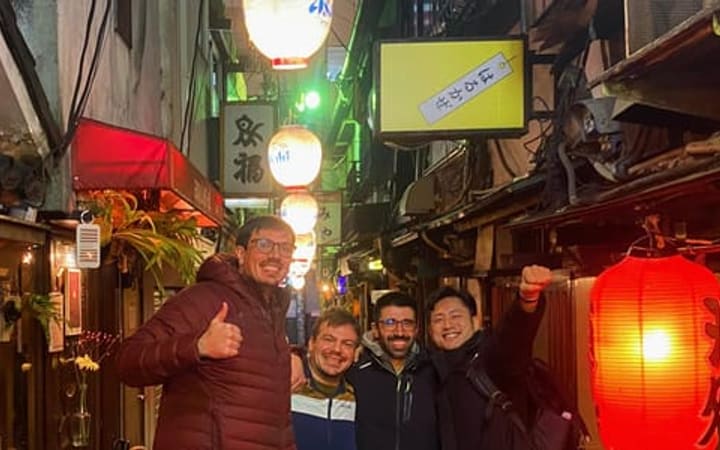
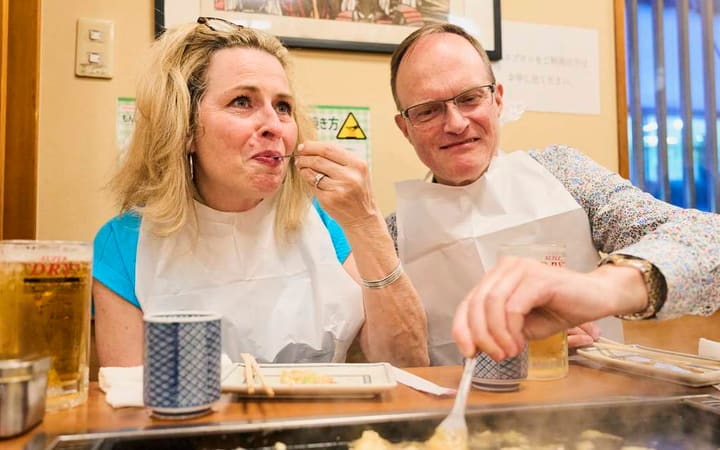
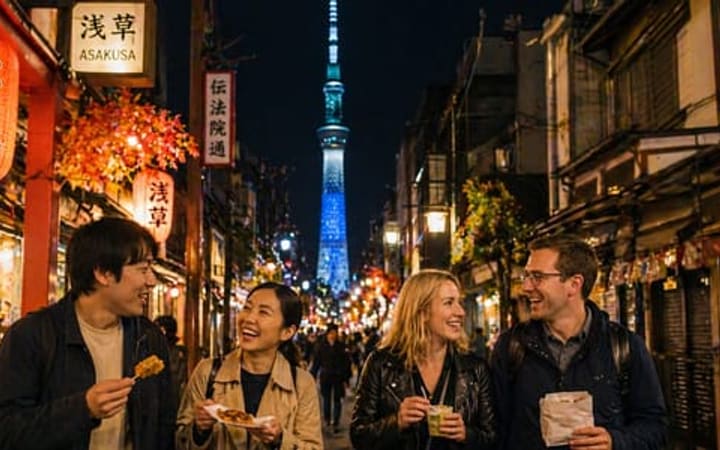
You don't need a guide to sit down on Hoppy Street; pointing at the next table works. But an evening food and drink tour earns its fee in two situations. One is when you want to try three or four places in one night without spending it translating menus. The other is when you want to see the small counter bars behind the main lane, which are hard to walk into cold. The local food-and-drink tours stop here, and the Klook bar crawl is built around this kind of evening. It also solves the one real problem of the lane, which is knowing what to order when the menu is handwritten in Japanese.
If you would rather eat a wider spread across the neighborhood, including tempura and sweets, read our guide to food in Asakusa first.
Book the Asakusa food and drink tour from US$31.80 · GetYourGuide