
Asakusa is where Tokyo keeps its old appetites. The restaurants people cross the city for are not new: Daikokuya has been frying tempura since the late Meiji era, Asakusa Imahan has served beef since 1895, and Umezono's millet sweets go back to 1854. The best food in Asakusa is a mix of those institutions and the cheap stuff in between: a ¥200 fried bun on Nakamise, a ¥320 melon pan the size of your face, a bowl of beef-tendon stew on a plastic stool on Hoppy Street.
If you only have one meal here, make it a tendon lunch on Denboin-dori. If you have a whole day, graze in the morning, sit down at noon, and drink in the evening.
The short list
Prices are what each shop publishes, tax included. Where only older figures exist, we say "about".
| What | Where | Price | Best time |
|---|---|---|---|
| Age-manju (fried bean bun) | Asakusa Kokonoe, Nakamise | ¥200 plain, ¥250 sesame, ¥300 chestnut | Mid-morning, before the crowds |
| Ningyo-yaki (little cakes) | Kimuraya Honten, Nakamise | boxes from about ¥600 | Any time before 18:00 |
| Jumbo melon pan | Asakusa Kagetsudo, Nishi-sando | ¥320 | Late morning, until it sells out |
| Matcha gelato, seven strengths | Suzukien, 7 min north of the temple | about ¥450–¥660 a cup | Early afternoon |
| Awa-zenzai (warm millet sweet) | Umezono | under ¥1,000 | A cold afternoon |
| Tendon | Daikokuya, Denboin-dori | ¥2,300–¥2,900 | 11:00 opening |
| Sukiyaki | Asakusa Imahan, Kokusai-dori | from ¥5,390 (lunch set) | Lunch walk-in or booked dinner |
| Unajū (eel on rice) | Komagata Maekawa | about ¥6,300 upwards | Lunch, before the service charge |
| Stew and Hoppy | Hoppy Street | about ¥500 upward a plate | 16:00 onward |
Prices are the lowest option the platform shows, in US dollars, and move with dates and exchange rates. The booking page is final. Prices checked: September 28, 2026.
Grazing Nakamise and the side streets
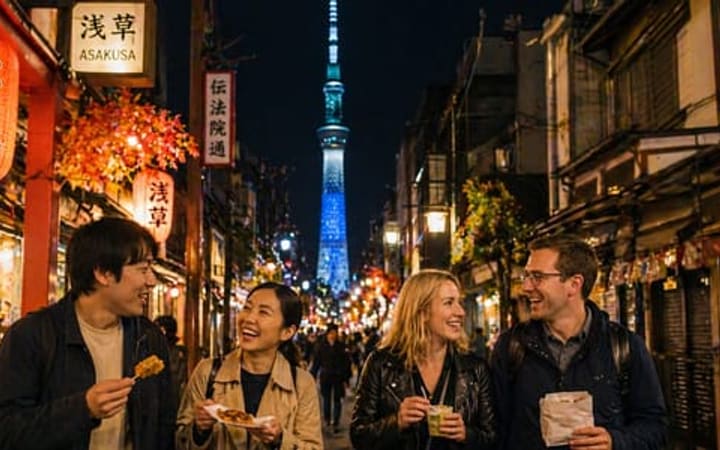
Nakamise-dori runs about 250 m from Kaminarimon to Hozomon, with 87 shops. Most are souvenirs, but a handful are the reason people come hungry. The rule of the street is simple: buy, then eat standing in front of that shop, and give the wrapper back to them. Shops ask you not to eat while walking, and the staff will remind you if you forget. It makes the street work, so play along.
Asakusa Kokonoe is the third shop from the temple end. It sells age-manju, bean buns fried in a light batter and served warm. The plain red-bean one is ¥200, sesame ¥250 and chestnut ¥300. Blogs still quote ¥130; ignore them. If you only buy one snack on Nakamise, this is it.
Kimuraya Honten, at the corner closest to the temple, has made ningyo-yaki since 1868, which makes it the oldest in Asakusa. The cakes are shaped like the pagoda, a pigeon, a lantern and the thunder god from the gate. Boxes start around ¥600. They are best while still warm from the iron.
Asakusa Kibidango Azuma makes kibi-dango, soft millet dumplings rolled in soybean flour, sold on skewers in fives. It is a recreation of an Edo-era Nakamise snack. Prices have moved around, so check the board; it is a few hundred yen either way. Just outside the gate, Tokiwado has sold kaminari-okoshi, crunchy puffed-rice bars, since 1816; you can often watch them being made.
On Denboin-dori, the east–west street that crosses Nakamise halfway along, Asakusa Menchi sells menchi-katsu, a deep-fried minced pork cutlet made with Koza pork. It is take-away only, open 10:00–19:00 (earlier if it sells out), and one cutlet costs ¥400. Eat it hot, by the counter.

Melon pan, matcha and the old sweet shops
Walk to the left (west) of the main hall and you reach the entrance of Nishi-sando, where Asakusa Kagetsudo sells its jumbo melon pan. The dough is fermented for about three hours, the crust crackles, and it costs ¥320 (older listings say ¥220). It opens at 11:00 on weekdays and 10:00 on holidays, and closes when the melon pan is gone. There is a second branch by Kaminarimon if the main shop has a line.
For matcha, walk about seven minutes north of the temple to Suzukien, a tea merchant that serves gelato made by Nanaya of Shizuoka in seven strengths, No.1 to No.7. No.7 is billed as the richest matcha gelato in the world and is the one people photograph. Plan for roughly ¥450–¥660 a cup; the stronger the matcha, the higher the price. It keeps short hours, about 11:00–17:00, and closes on irregular days.
Two old houses are worth sitting down in. Umezono began in 1854 as a tea stall inside a Senso-ji sub-temple, and its signature is awa-zenzai: warm steamed millet under smooth red-bean paste. It is under ¥1,000 and ideal on a cold day. Funawa, founded in 1902, is the home of imo-yokan, a firm sweet-potato jelly. Buy a slice to take away or sit in the café upstairs. Both close in the early evening, so do sweets in the afternoon, not after dinner.
Tempura: the Asakusa lunch
Tempura rice bowls are the classic Asakusa lunch, and Daikokuya Tempura on Denboin-dori is the classic address. It opened in 1887 as a soba shop, switched to tempura at the end of the Meiji era, and is known for tendon with a dark, sweet-savory sauce soaked into the batter. The official menu starts at ¥2,300 for a bowl with one shrimp, one kisu (whiting) and a kakiage fritter, ¥2,700 buys the four-shrimp ebi-tendon, and the tendon set with sides is ¥2,900. Blogs quoting ¥1,700 are years out of date. It opens at 11:00; arriving at opening beats queuing at 12:30.
Aoi Marushin, three minutes from Kaminarimon, has fried Edo-style tempura in a thicker batter since 1946. It is larger, calmer and better for groups, stays open until 21:00 (last order 20:00), and closes on Mondays. Its tendon and kakiage bowls have been listed at a little over ¥2,000, but the shop does not publish its à la carte prices online, so check the menu at the door.
Sukiyaki and eel: when to spend
Asakusa Imahan is the name most people mean when they ask for the best restaurant in Asakusa, and it is where we would send you for a splurge. It was founded in April 1895 as a beef hot-pot shop and has cooked in its present spot on Kokusai-dori since 1928.
The trick is lunch. From 11:30 to 14:30 Imahan serves cheaper dishes that cannot be reserved, some limited to 20 a day:
| Lunch dish | Price |
|---|---|
| Hyakunen gyudon (the "100-year" beef bowl) | ¥2,200 |
| Meiji sukiyaki-don | ¥3,300 |
| Sukiyaki or shabu-shabu lunch set | ¥5,390 |
| Lunch kaiseki | ¥8,250 |
Dinner is full sukiyaki from ¥9,680 and rises past ¥30,000 for Kobe beef. A 10% service charge applies above ¥5,500 per person, and dinner is booked by phone. Our full Asakusa Imahan review explains which Imahan is which (there are three businesses with the name) and how to get a table.
For eel, Komagata Maekawa sits on the Sumida riverside south of Azumabashi and traces its history back about 220 years. Unajū starts around ¥6,300 for farmed domestic eel. A 10% service charge is added after 16:00, which is another reason to come at lunch.

Where locals eat and drink
The honest answer to "where do locals eat in Asakusa" is: somewhere cheaper and scruffier than the places above.
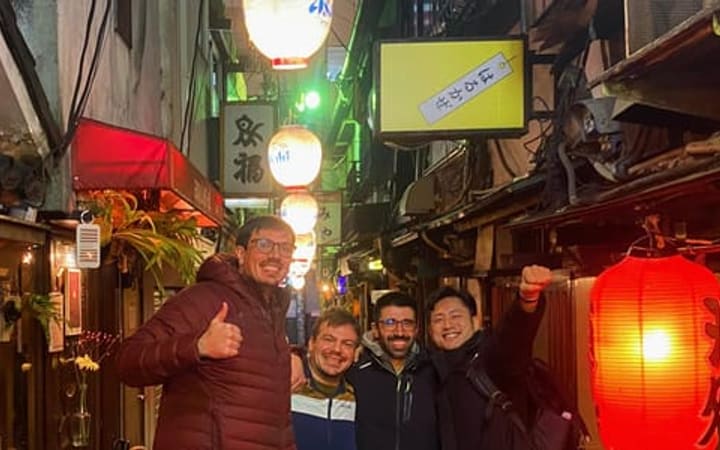
Hoppy Street, the lane west of the temple toward Rokku, is lined with izakaya that put tables out under vinyl awnings and serve their own nikomi (beef-tendon or offal stew) with Hoppy and shochu. Some open in the morning at weekends; most shut by 21:00–23:00. It gets its own guide: Hoppy Street and the izakaya.
Under the station, the Asakusa Underground Street has a standing soba counter, Monju, known for kakiage soba and open from 06:00 on weekdays, and Fukuchan, a yakisoba counter by the Ginza Line gates. Neither will change your life; both are quick, cheap and very Showa.
By Azumabashi, Kamiya Bar has poured its brandy cocktail, Denki Bran, since 1882. The first floor is cash and meal tickets, the upper floors take cards, and last orders are at 19:30. It is more of an evening stop, so see our guide to Asakusa at night.
Food tours and cooking classes
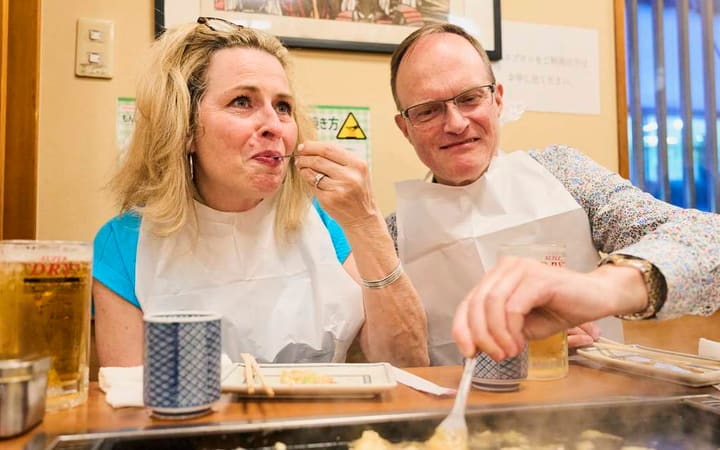
A guided tour makes sense in Asakusa for one reason: the good small places have no English menus and no signs you can read. On a tour you walk in behind someone who orders for you. The evening tours are the better value. They lean toward izakaya and Hoppy Street, and the 12-dish tour spreads a dinner's worth across four eateries. The daytime tours lean on snacks and the temple story, so they suit people seeing Senso-ji for the first time. If you are already doing a walking tour of the temple, pick an evening food tour instead of a second daytime one.
If you would rather make something than graze, Asakusa has a sushi-making class with thousands of reviews behind it. You make rolls and hand-pressed sushi in about 100 minutes, and it is popular with families. The sake version adds matcha and unlimited sake, which makes it an adults' afternoon.
Loading live availability from GetYourGuide…
For something smaller and sweeter, the matcha-and-mochi workshops on our tea ceremony and crafts page take under an hour. They fit neatly between lunch and the temple.
A day of eating, hour by hour
- 09:30 Start at Kaminarimon and walk up Nakamise as the shutters go up. Have an age-manju at Kokonoe and ningyo-yaki at Kimuraya, eaten by each stall.
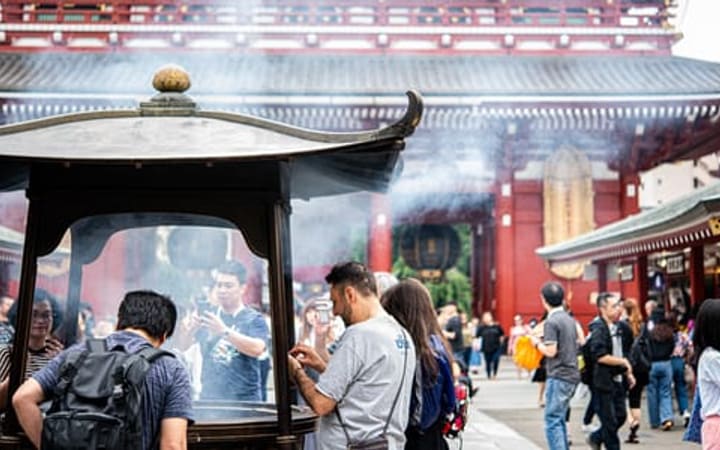
- 10:30 Visit Senso-ji while you digest, then leave by the west side for Kagetsudo's melon pan as it opens.
- 11:30 Tendon at Daikokuya, or queue for Imahan's lunch bowls on Kokusai-dori.
- 14:00 Walk north to Suzukien for matcha gelato, or sit down at Umezono.
- 16:00 Hoppy Street for stew and a first drink, or join an evening food tour.
- 19:00 A last Denki Bran at Kamiya Bar before its 19:30 last order.
Carry cash for the stalls and small izakaya. Many snack counters and Hoppy Street shops do not take cards, while the big restaurants do. And eat early: much of old Asakusa is closed by 19:00. The late options are izakaya, Imahan (last order 20:30) and the 24-hour Don Quijote for snacks to take back to the hotel.
See the 12-dish Asakusa food tour from US$71.54 · GetYourGuide