
Asakusa Hanayashiki is a small amusement park a few minutes' walk west of Senso-ji's main hall, squeezed between temple lanes and the Rokku entertainment streets. It calls itself "The Oldest Amusement Park in Japan", tracing its story to a flower garden opened in 1853, and it runs the country's oldest operating roller coaster. You pay ¥1,600 to get in and buy rides as you go, or pay ¥4,600 once for the One-Day Pass.
Tickets and prices
Hanayashiki splits the cost in two: admission to get through the gate, and rides once you are in. Many blogs, and even some big booking sites, still show the old ¥1,200 entry. The current table is this:
| Ticket | Adult (junior high to 64) | Child (5 to elementary school) | Senior (65+) | Ages 0–4 |
|---|---|---|---|---|
| Admission only | ¥1,600 | ¥800 | ¥800 | Free |
| One-Day Pass (admission + unlimited rides) | ¥4,600 | ¥3,400 | ¥3,400 | Free, some items charged |
| Unlimited Ride Pass (rides only) | ¥3,000 | ¥2,600 | ¥2,600 | — |
| Ride tickets | ¥100 each, or 11 for ¥1,000 | same | same | — |
The age bands follow the Japanese school year, which starts on 1 April. A 12-year-old still in elementary school pays the child rate. The English page's "13–64" and "5–12" are only a loose translation.
Which one should you buy? Every ride costs 5 or 8 tickets, so ¥500 or ¥800 at the single-ticket price. The four big rides (Roller Coaster, Disk-O, Little Star and the haunted house) take 8 tickets each. That makes 32 tickets, which you can get from three ¥1,000 books. So the four headliners alone cost about the same as the ¥3,000 Unlimited Ride Pass. Add any fifth ride and the pass comes out ahead. For a child, the pass pays off from around the sixth small ride.
The One-Day Pass is simply admission plus the Unlimited Ride Pass (¥1,600 + ¥3,000 = ¥4,600), so buying it at the gate saves nothing. What it gives you is one transaction instead of two. If you aren't sure how much you'll ride, pay admission first and decide inside. The Ticket House inside sells the Unlimited Ride Pass once you've seen the queues. Leftover ride tickets never expire, but you'll pay admission again on your next visit to use them.
A few things no pass covers. The Panda Car costs ¥200 and the Game Plaza from ¥100, and both take cash only. The Maruhana Ennichi festival games start at ¥500. There is no ATM in the park and no currency exchange, only change machines. Cards, e-money and QR payments work at the gate, Information, the Ticket House and the ticket machines.
How to buy Hanayashiki tickets
At the gate. The simplest option, and it costs the same as everywhere else. On a weekend morning the ticket-window queue is the main reason to buy ahead. Same-day gate tickets and the regular Unlimited Ride Pass stop selling at 17:00. Gate tickets can't be refunded.
The official web store (ticket-en.hanayashiki.net) sells admission (¥1,600) and the One-Day Pass (¥4,600) at exactly the gate price. The benefit is skipping the window, not a discount. You can buy on the day, and you can cancel it yourself for a full refund until 23:59 the night before. That makes it the most flexible ticket you can hold. If you're booking directly anyway, this is the one we'd pick. There is more on how the park sells tickets in our Hanayashiki official review.
Klook sells both versions as a dated ticket: admission only, or admission plus the One-Day Pass, with child and senior rates and under-5s free. Prices land close to the official ¥1,600 and ¥4,600 at the day's exchange rate, and cancellation is free with 24 hours' notice. It suits you if you already keep your Tokyo bookings in the Klook app or want to pay in your home currency. If you need a refund, it goes through Klook, not the park. More on the platform in our Klook review.
See the Hanayashiki ticket on Klook
KKday lists both an admission-only ticket and a One-Day Pass version, with QR entry and timed entry slots. Its description gets the park's founding year wrong ("1835"). The KKday review covers how its refunds work. Rakuten Travel Experiences sells admission plus the unlimited pass with same-day booking. When we checked, its listing card and product page showed different prices, so check the checkout total against the official ¥4,600 (Rakuten review).
GetYourGuide and Viator both have Hanayashiki pages, but neither sells admission. Their pages list rickshaw rides and walking tours around the park instead.
The rides and what each one costs
The park has 18 ticketed rides, if you count the NinNin Park play area, plus free extras. Heights are minimums. "From age 0" means babies can ride with a companion.
| Ride | Tickets | Height / age notes | Runs in rain |
|---|---|---|---|
| Roller Coaster | 8 | 110 cm+, not for ages 65+ | Yes |
| Disk-O | 8 | 120 cm+, not for ages 65+ | No |
| Little Star | 8 | 130 cm+, not for ages 65+ | Yes |
| Haunted House (walk-through) | 8 | Alone from age 5; age 4 and under with a junior-high+ escort | Yes |
| Thriller Car | 5 | From age 0 | Yes |
| Bikkuri House | 5 | From age 2 | Yes |
| Shirasagi | 5 | 90 cm+; under 120 cm rides with an escort | Yes |
| Merry-go-round | 5 | From age 0 | Yes |
| Swan | 5 | From age 0 | No |
| Sky Ship | 5 | From age 0 | No |
| Pyonpyon | 5 | From age 2; ages 2–4 with an escort aged 16+ | Yes |
| Helicopter | 5 | From age 2; age 7 and under with an escort | Yes |
| Chibikko Taxi | 5 | From age 0 | Yes |
| Carnival | 5 | From age 2 | Yes |
| Maruhana Kenjutsu Dojo | 5 | From age 2 | Yes |
| Panorama Jikan Ryoko | 5 | From age 0 | Yes |
| Scoop Cameraman | 5 | From age 2 | Yes |
| NinNin Park | 5 per child and per adult | 6 months to elementary school | Yes |
| Panda Car | ¥200 cash | No limits | — |
The Thriller Car is billed as a Western-style haunted house ride, and the park itself admits it is more funny than scary. The walk-through Haunted House is the one that makes teenagers grab each other. The Panda Car is a slow, ride-on mechanical panda that plods around the paths. It is Hanayashiki's own trademark, and toddlers love it.
Free with admission: stage shows (photos are generally allowed, and shows go on in rain) and the Hanasora Garden rooftop. From up there the park promises a clear line of sight from Senso-ji to Tokyo Skytree.
One ride you'll see in older photos is gone. The Bee Tower, the park's old observation tower, was retired in 2016. The Asakusa Hanagekijo hall now stands on its site.
The 1953 roller coaster

The Roller Coaster opened in 1953, and the park describes it as the oldest existing roller coaster in Japan. It isn't the first ever built here and it isn't the oldest in the world, but it's the oldest one still running. Its top speed is 42 km/h, which sounds tame until you notice how close the track runs to the surrounding buildings and rooftops. Most of the thrill comes from being so close to everything, not from speed.
It costs 8 tickets or is covered by a pass. Riders must be at least 110 cm, and the park does not allow guests aged 65 or over. If the coaster is the reason you came, ride it first, before the park fills up.
Babies and under-5s: the rules and the exceptions
"Under 5 free" is true, with conditions.
- Admission is free for ages 0–4.
- Most rides are free for under-5s, but a child up to and including age 4 must ride with someone of junior-high age or older, and that person pays. (The English page says "under 4"; the Japanese rule is "up to 4".)
- Paid for under-5s: the Roller Coaster, Disk-O and Little Star, for a small child tall enough to ride them.
- NinNin Park, the indoor children's ninja play area, is free for ages 6 months to 2 years. From age 3, the child pays 5 tickets. A guardian aged 20 or older must go in and pays 5 tickets too. The Unlimited Ride Pass covers one session only.
- Ride-specific escorts: Pyonpyon needs an escort aged 16+ for ages 2–4, the Helicopter for age 7 and under, and Shirasagi for anyone under 120 cm. The escorted child rides free.
NinNin Park runs 30-minute sessions of up to 50 people. Numbered tickets are handed out in front of it after the park opens, first come first served. On weekends and holidays the first session is at 10:20. If NinNin Park is the goal, arrive at opening.
Families with babies are well served. There are seven diaper-changing spots, nursing rooms in the 3F Kids Space and in front of Marion Crêpe, and hot water at Information for formula (formula itself isn't sold). A vending machine in Kids Space sells diapers. Kids Space is an indoor, shoes-off rest area with a corner for babies up to 18 months. There is no stroller rental, but folded strollers can be left at Information. Our Asakusa with kids guide covers the rest of the neighborhood.
Opening hours, closed days and rain
Standard hours are 10:00–18:00, with last entry 30 minutes before closing. The park changes this more than most attractions. Hours shorten in parts of December and stretch into the evening for summer events. Opening days are irregular too. There is no fixed weekly holiday. Instead the park closes for maintenance on one or two Tuesdays a month, plus multi-day blocks in early July and early December. Always check the official business-hours calendar for your date before you build a day around it.

In summer the park has stayed open until 21:00 on many evenings, including Sumida River Fireworks night (usually the last Saturday of July). It openly warns that the fireworks may or may not be visible from inside. Seasonal events such as the autumn Halloween program and after-dark horror nights are announced on the park's news page.
Rain closes less than you'd think. Everything except the Swan, Sky Ship and Disk-O basically keeps running, though outdoor seats get wet. The Haunted House, NinNin Park, Kids Space and the stage shows are good for a wet morning. Re-entry is allowed. Ask staff at the exit for a re-entry ticket, go eat, and show it at the entrance when you come back. The only entrance is the Asakusa Gate on the Senso-ji side. The exit is on the Kokusai-dori side, so plan to leave toward the Rokku streets. There is no parking. Coin lockers are beside the Asakusa Gate, under Disk-O, beside the coaster platform and by the exit near Little Star.
From flower garden to amusement park
Hanayashiki means "flower mansion," and it began exactly as that. In 1853 the gardener Morita Rokusaburo opened a flower garden of peonies and chrysanthemum craft on land granted by Senso-ji. By 1856 it was showing more than 80 kinds of large chrysanthemums. Around 1872 play equipment and rare birds arrived, and animal exhibits began in 1886. In 1923 a litter of five tiger cubs was born there. The Great Kanto Earthquake struck the same year and hit the animals hard. Emperor Taisho is said to have visited incognito.
In 1944 the wartime building-evacuation order had every wooden building demolished and the park closed. It came back as an amusement park in 1947 and was rebuilt in 1949. Entry was free, and early rides included the Bikkuri House, a miniature train and a shooting gallery. The roller coaster followed in 1953, and in 1960 a roughly 40 m observation tower opened. It was Japan's tallest at the time and was later renamed the Bee Tower. Paid admission only began in February 1985, when a change in entertainment-business law forced it.
Today the park is operated by Hanayashiki Co., Ltd., part of the Bandai Namco Group, which also runs the Asakusa Hanagekijo hall on the old Bee Tower site. 8 August is officially registered as Hanayashiki Day.
Is Hanayashiki worth it for adults?
For thrill seekers, no. Nothing here competes with the big parks, and the coaster tops out at 42 km/h. For almost everyone else we'd say yes, in a small dose. For ¥1,600 plus a few ride tickets you get Japan's oldest operating coaster rattling past Asakusa rooftops, a haunted house built for laughs and screams in equal measure, a free rooftop view and free stage shows. The setting is pure Showa-era nostalgia.
Our advice for adults without children: skip the One-Day Pass. Buy admission, then ride tickets as you go. Two ¥1,000 books (22 tickets) cover the coaster, the haunted house and one five-ticket ride, for ¥3,600 all in. If you're 65 or over, the coaster, Disk-O and Little Star are closed to you, so the senior One-Day Pass rarely pays off. In autumn the park has run a promotion letting kimono-wearers in free. Check the news page if you're renting a kimono that day anyway.
For families with children under about 10, it's the best-value few hours in Asakusa, and the One-Day Pass makes sense.
A half day around Hanayashiki
- Hanayashiki
- Senso-ji Main Hall
- Kagetsudo melon pan
- Hoppy Street
- Asakusa Stn (Tsukuba Express)
- Asakusa Stn (Ginza/Asakusa/Tobu)
- Tourist Information Center
This is how we'd spend a morning and early afternoon, starting early to beat the crowds on both sides.
- 08:30 — Senso-ji before the crowds. The main hall opens at 06:00 (06:30 October to March), and the grounds are at their quietest early. Our Senso-ji guide has the route.
- 09:50 — Queue at the Asakusa Gate, on the temple side, with a web ticket already on your phone. Coaster first, then the rooftop garden. With small children, go straight for a NinNin Park numbered ticket.
- 12:00 — Lunch. Outside food is allowed in the park. Otherwise use your re-entry ticket and walk out. Kagetsudo's jumbo melon pan is sold on the western approach to the temple, and many of the Hoppy Street izakaya, a couple of minutes' walk away, open around midday. Our food guide covers sit-down options.
- 13:30 — One more Asakusa experience. A 30-minute rickshaw loop works with a baby on your lap. A chopstick workshop takes under an hour and you keep what you make. A two-hour kids' ninja class is the pick for children with energy left.
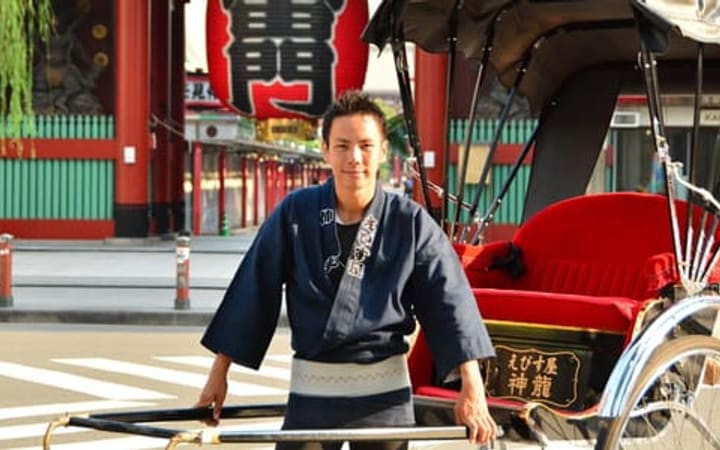
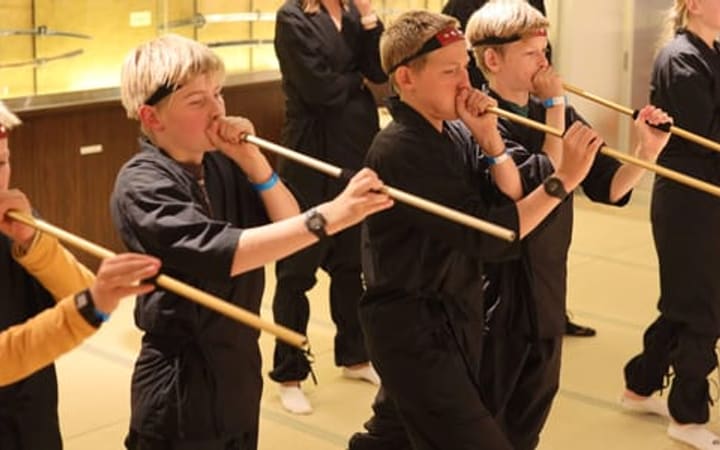

Prices are the lowest option the platform shows, in US dollars, and move with dates and exchange rates. The booking page is final. Prices checked: September 28, 2026.
- Late afternoon — the free view. The Tourist Information Center's 8F terrace, opposite Kaminarimon, is open until 22:00 and looks straight at Skytree.
If you still have energy, Skytree and the Sumida Aquarium are one short train ride away. See what's nearby, or the rickshaw guide for longer routes.