
If you type "sumida park asakusa" into a map, you get a long strip of green on both banks of the river, five minutes east of Asakusa Station. That strip is where Asakusa goes to breathe. It has about 700 cherry trees, the best free view of Tokyo Skytree, a footbridge that walks you to the tower in twenty minutes, and the pier for the water bus to Odaiba. Entry is free, there are no gates, and on a weekday morning outside cherry season you may have a bench to yourself.
This page covers the park on both banks, the seasons that fill it, the ways across and along the river, and the two boats worth paying for: the water bus and a yakatabune dinner cruise. If you already know you want one of them, these are the ones we would book:
Prices are the lowest option the platform shows, in US dollars, and move with dates and exchange rates. The booking page is final. Prices checked: September 28, 2026.
Two banks, one park
Sumida Park was built after the 1923 earthquake, the largest of three big parks laid out in the reconstruction of Tokyo. It is one park on paper but two in practice, because the river runs through the middle.
The Asakusa bank (Taito City) starts right behind Tobu Asakusa Station and the water-bus pier and runs north along the river. It is a promenade more than a garden: a row of cherry trees, riverside benches, a youth baseball field and a straight line of sight across the water to Skytree and the golden Asahi flame. This is the side you reach first from Senso-ji, about a five-minute walk from the temple's east side.
The Mukojima bank (Sumida City) is larger, about 80,000 m², and quieter. Its best corner is a Japanese garden built around what is left of the pond of the Mito Tokugawa estate, the lords who kept a villa here in the Edo period. This side also has two play areas with a sandpit, slides and swings, which makes it the half to aim for with small children (more ideas on our Asakusa with kids page).
You cross between the two by the road bridges (Azumabashi, Kototoibashi) or, better, by the Sumida River Walk.
Cherry blossoms: where to stand and when
Sumida Park is one of the classic hanami (blossom-viewing) spots on the east side of Tokyo, and the reason is simple: trees on both banks and water in between.
- Asakusa bank: about 400 trees, mostly Somei-yoshino plus some later-flowering satozakura. During the season they are lit from sunset to 21:00 next to the baseball field.
- Mukojima bank: about 300 trees. The best stretch is the Bokutei embankment, where 125 trees line roughly a kilometer between Makurabashi and Sakurabashi bridges.
Peak bloom is usually from late March to early April. The Asakusa side sometimes opens a little earlier, from mid-March. Forecasts move by a week either way, so check a bloom forecast in the days before rather than trusting a date you read months ago.
How to do it well: walk the Asakusa bank north at around 7:00 or 8:00, before the picnic tarps go down, then cross to the Mukojima side and come back along the Bokutei embankment. The photo you have seen a hundred times is taken from the Asakusa bank looking across the water: pink in the foreground, Skytree behind. Weekend afternoons at peak bloom are shoulder to shoulder, and by evening the lit trees on the Asakusa side draw a crowd with cans of beer. That is part of the fun, but not if you came for photos.

The Sumida River Fireworks
The Sumida River Fireworks (Sumidagawa Hanabi Taikai) descend from the river-opening fireworks of 1733. The show was dropped in the 1960s and revived under its current name in 1978. It is usually held on the last Saturday of July, 19:00–20:30, with about 20,000 shells split between two launch sites.
- Venue 1 sits right by Sumida Park, from below Sakurabashi down to above Kototoibashi. The nearest stations are Asakusa, Oshiage, Tokyo Skytree and Hikifune.
- Venue 2 is further south, between Komagatabashi and Umayabashi, closer to Kuramae and Ryogoku.
The rules worth knowing: the show runs in light rain but is cancelled in a storm, with no postponement date, and the decision is made at 8:00 on the day. The organizers publish the date each year rather than a fixed rule, so confirm it on the official site.
Honest advice: the park sits inside Venue 1, so that evening it is about as crowded as Tokyo gets. Riverside spots are claimed early in the day, and the stations around Asakusa stay jammed long after the last shell. If you want a view without that, book a hotel with a fireworks-viewing plan well ahead (the Asakusa Tobu Hotel on our Asakusa hotels page sells them), or watch from a distance and accept a smaller show. Dinner boats on the river that night are booked far ahead.
Across the water: River Walk, Mizumachi and the Asahi flame
The Sumida River Walk is a footbridge of about 160 m that hangs off the side of the Tobu railway bridge, just north of Azumabashi. It is free, open 07:00–22:00, and cyclists must push their bikes. You walk right beside the Tobu tracks, so trains pass close enough to make children stop and stare.
On the far side it lands you in Tokyo Mizumachi, a line of cafés and small shops tucked under the Tobu viaduct, which leads you east toward Skytree. From Tobu Asakusa Station's north exit it is five minutes over the bridge to Mizumachi; from Ginza Line Asakusa Exit 5, about seven. Keep going along the viaduct and you reach the foot of Skytree about 20 minutes after leaving Senso-ji, which is the most pleasant way to get there. Tickets and timing are on our Near Asakusa page.
The golden object you see from every bank is the Flamme d'Or, designed by Philippe Starck and set on the roof of Asahi's Super Dry Hall in 1989. It is about 44 m long and weighs 360 tonnes. Next to it, the Asahi headquarters tower is built to look like a glass of beer with a white head. Both are on the Sumida side, across Azumabashi. The classic photo of the flame, the beer-glass tower and Skytree together is taken from the Asakusa end of Azumabashi, and it is at its best at blue hour. We cover the evening walk in detail in Asakusa at night.

The water bus from Asakusa
The Sumida River is also a road, and the boat is the most enjoyable way out of Asakusa toward the bay. Tokyo Cruise (Tokyo Cruise Ship Co.) sails from the Asakusa pier at the foot of Azumabashi: one minute from the Ginza Line and Tobu stations, three from the Toei Asakusa Line. You pass under bridge after bridge, each a different color and shape, before the river opens out into the bay.

| From Asakusa to | Boat | Adult | Child (6–11) | Time |
|---|---|---|---|---|
| Odaiba Seaside Park | Himiko | ¥2,000 | ¥1,000 | about 50 min |
| Odaiba Seaside Park | Emeraldas | ¥2,000 | ¥1,000 | about 55 min |
| Odaiba Seaside Park | Hotaluna | ¥2,000 | ¥1,000 | about 65 min |
| Hinode Pier | Hotaluna | ¥1,400 | ¥700 | about 40 min |
| Hinode Pier | Regular boat | ¥1,000 | ¥500 | about 40 min |
| Hama-rikyu Gardens | Regular boat | ¥1,180 | ¥470 | about 35 min, garden entry included |
A few things the fare table does not tell you:
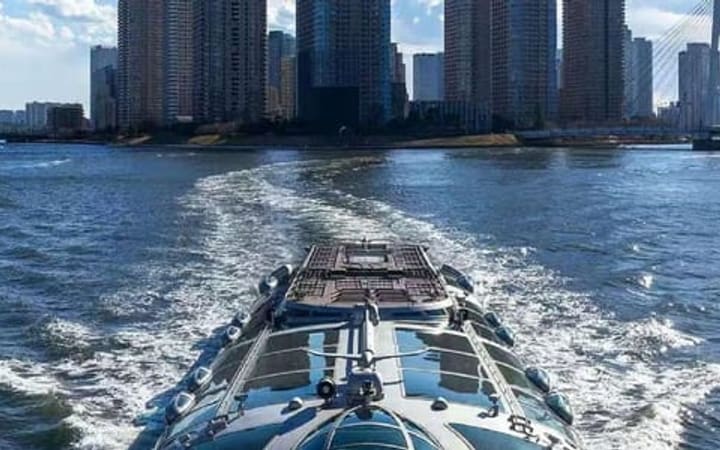
- Himiko, Hotaluna and Emeraldas are the futuristic, spaceship-like boats designed by the manga artist Leiji Matsumoto. They are the reason most visitors ride, and they cost more than the regular boat. If you only want the river, the ¥1,000 regular boat to Hinode sees the same bridges.
- Each of the three has monthly rest days: Himiko the second Tuesday of the month and the day after, Hotaluna the third Tuesday and the day after, Emeraldas the fourth Tuesday and the day after (not in August). There are extra non-sailing days on top, so check the timetable before you plan around a boat.
- Booking: the operator's site sells seats up to five minutes before departure, and booked passengers board first. The Hama-rikyu run cannot be booked at all; buy it at the ticket machines at the Asakusa pier.
- Children: adults are 12 and over. One child aged 1–5 rides free with each adult.
Odaiba is the natural destination: you step off at Seaside Park with the beach, the Rainbow Bridge and the shopping malls in front of you. Going one way by boat and returning by train is the classic plan.
GetYourGuide sells a water-bus ticket too, resold by a travel agency. It does not guarantee which boat you get and sends the boarding link the day before, so for most people booking direct on the operator's site is simpler. We compare the two properly in the Tokyo Cruise review. If you prefer to keep everything in one app, the GetYourGuide water-bus ticket is there.
Yakatabune: dinner on the river
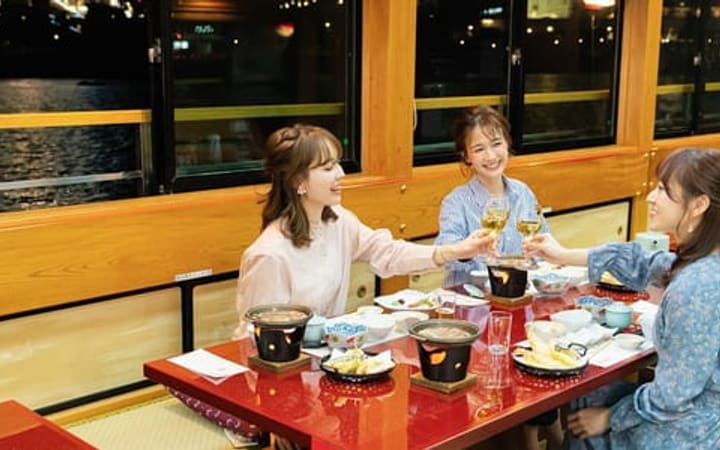
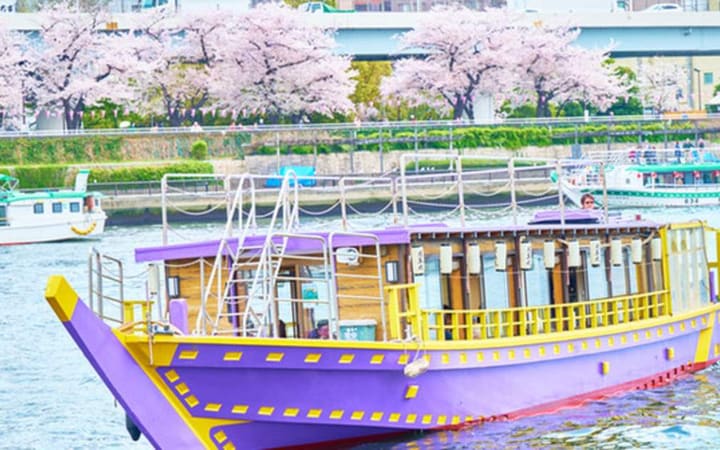
A yakatabune is a traditional roofed houseboat with a low-table cabin and lanterns along the eaves, the kind you see in old woodblock prints of the Sumida. Today they run dinner cruises: you sit down to a Japanese set meal while the boat drifts down the river toward the bay and back. On most evenings you can see a few of them moored near Azumabashi, lanterns lit, before they cast off.
The one we would pick is the GetYourGuide cruise that leaves from the Azumabashi pier in Asakusa: about 2.5 hours, run by the Amitatsu yakatabune company, with more than 900 reviews behind it. It has free cancellation up to 10 days before, which is longer than most tours, so decide early. Klook sells a similar dinner cruise with Edomae Kisen, another yakatabune operator. We compare the two platforms in our GetYourGuide review and Klook review.
Tips: ask for a seat on the side facing Skytree as you leave Azumabashi, check what the drinks package covers before you book, and eat lightly beforehand.

A river afternoon, planned
This is the order we give friends who have half a day:
- Morning at Senso-ji before the crowds, then five minutes east to the Asakusa bank of Sumida Park.
- Cross the River Walk, have coffee in Tokyo Mizumachi, and walk on to Skytree (about 20 minutes from the temple).
- Walk back over Azumabashi for the Asahi flame, then take an afternoon Himiko or Emeraldas from the pier to Odaiba.
- Or skip Odaiba, stay in Asakusa and end with a dinner cruise, or with a cheaper evening of izakaya on Hoppy Street and Asakusa food.
In the rain, the park loses most of its charm, but the water bus does not: the cabins are enclosed and the bridges look good wet.
Book the Sumida River dinner cruise from US$101.75 · GetYourGuide