
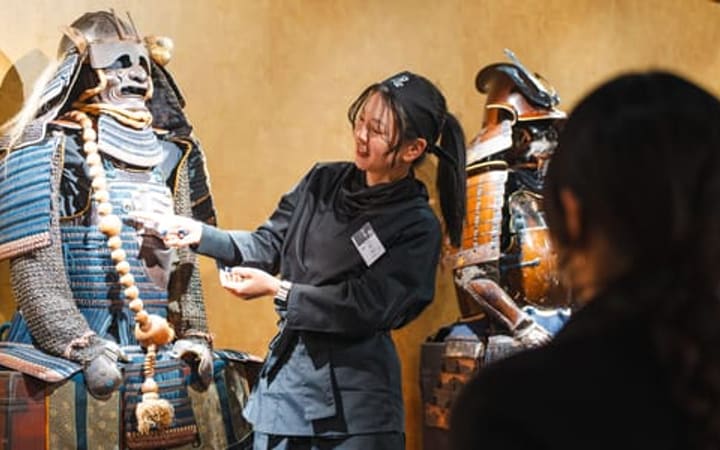
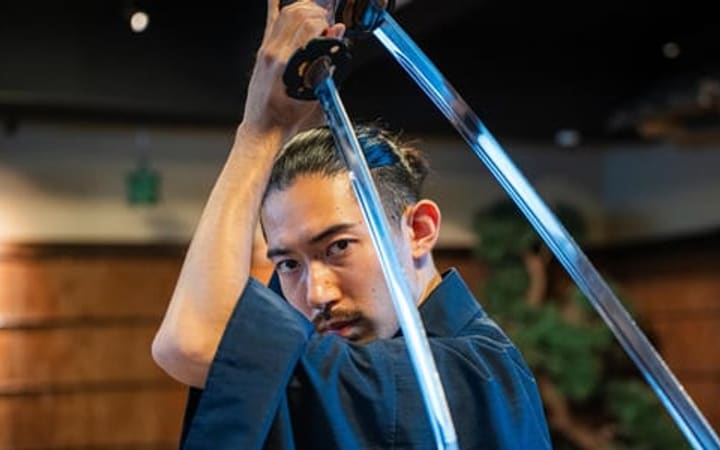
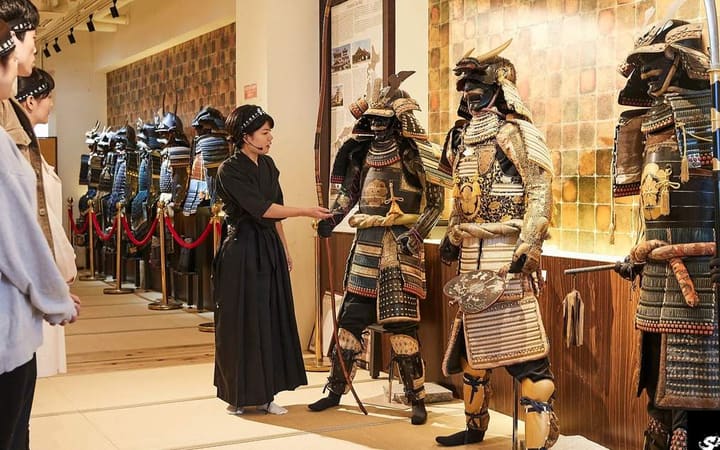
The Samurai Ninja Museum Tokyo in Asakusa is not a quiet museum with labels on glass cases. It is a guided hour, in English, in which a staff member walks your group through armor, swords and ninja tools, then puts you in a samurai helmet with a metal sword for photos and hands you a fistful of shuriken for a throwing contest. The basic adult ticket is ¥3,300 including tax (¥2,970 if you book online with MAIKOYA). The address is 1-8-13 Nishi-Asakusa, about two minutes from Tawaramachi on the Ginza Line, which is the first thing people get wrong.
It is also young. The museum opened only a few years ago, so treat it as a well-run hands-on attraction rather than a historic collection. For the right person (a ten-year-old, a first-time visitor who likes a good costume, a group on a wet afternoon) that is exactly what they want.
Loading live availability from GetYourGuide…
Finding it: Nishi-Asakusa, not the temple side
The museum is west of Senso-ji, across Kokusai-dori, in the quieter blocks between Tawaramachi station and Kappabashi. Two details save you a wander:
- Get off at Tawaramachi, one stop before Asakusa on the Ginza Line. The museum is about two minutes away, which beats walking over from the Kaminarimon crowds.
- Look for the FamilyMart. GetYourGuide's meeting point is "the entrance to the right of FamilyMart".
- Check the address. MAIKOYA's own footer prints it as "1-8-13 Asakusa", which is wrong and sends map apps to the wrong block. It is Nishi-Asakusa, postcode 111-0035.
The same company runs a separate Samurai Museum in Shinjuku and another Samurai Ninja Museum in Kyoto. The GetYourGuide listing warns people not to turn up at those by mistake, and it happens often enough that the warning is there.
What happens in the basic hour
The basic ticket is the one most people book, and its hour runs like this:
- Guided tour of the exhibits in English: armor, helmets, swords and the story of how samurai and ninja actually lived and fought.
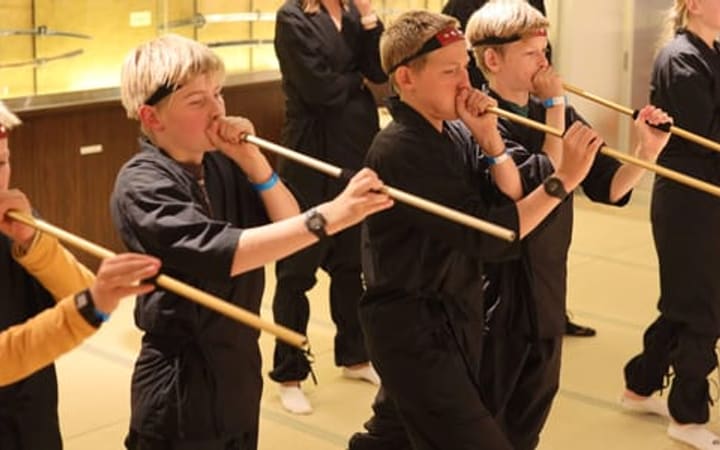
- Ninja weapons talk: shuriken, blowguns and the other tools, with the myths separated from the history.
- Samurai armor try-on, with a replica sword, for photos.
- Shuriken-throwing competition to finish.
Sessions take up to 30 people, and on GetYourGuide one booking covers up to 10. The building is listed as wheelchair accessible.
Two honest warnings. First, the hour is tightly scheduled. Some Tripadvisor reviewers called it rushed or basic, and one felt that 15 of the 60 minutes went on throwing plastic stars. Another guest arrived seven minutes early and was slotted into a session already under way. Plenty of others loved it; the difference is mostly expectations. Second, food rules are strict: covered drinks are fine in the building, nothing may be eaten or drunk in the exhibition rooms, and alcohol is banned throughout.
Real or replica?
This is the most common question, and the answer is both. According to the operator, the items on display are authenticated pieces. Everything you touch, wear or throw is a model or duplicate. That is sensible (nobody should be handing an antique helmet to a stranger) but it's worth knowing before you book if you're a serious collector. The gift shop sells authenticated antique swords and armor, and that is where the real metal changes hands. Check export rules before you buy a blade.
Choose your format
The museum sells more than the basic hour. The two-hour sessions include the museum tour and then give you proper time on one skill.
| Format | Length | Best for | Notes |
|---|---|---|---|
| Basic ticket (tour + ninja experience) | ~60 min | First-timers, mixed groups | ¥3,300 adults direct; English only |
| Premium samurai sword lesson | 120 min | Adults and teens who want to learn a cut | No under-10s |
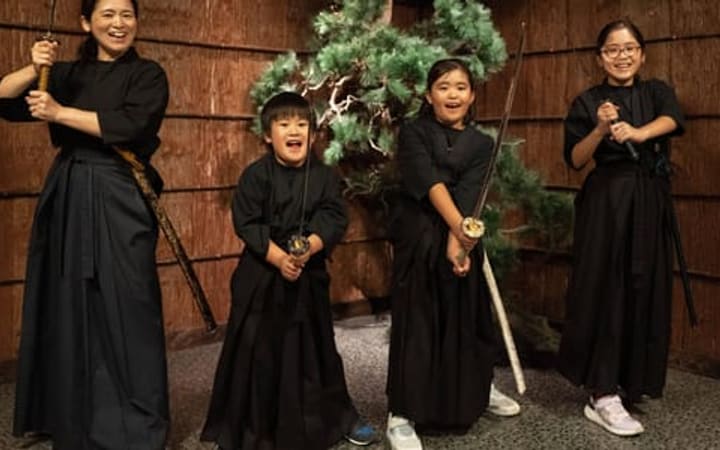
| Family samurai sword lesson | 120 min | Parents with younger kids | Built for families |
| Kids' ninja training | 120 min | School-age children | Costume, shuriken and ninja skills |
| Real samurai armor trial | 120 min | Photos in a full suit | Sold on the museum's own site |
| Private tour | 60 min | Non-English speakers, private groups | Needed for other languages |
| Museum + kimono tea ceremony combo | 2.5–3 h | A full culture morning | Walk between two venues; no under-7s |
The combo pairs the basic ticket with MAIKOYA's kimono tea ceremony in Asakusa, about a five-minute walk away, and it costs ¥9,900 including tax booked direct. It does not include the sword or ninja lessons. Our tea ceremony and crafts guide covers the tea side and its rivals.
On booking platforms, here are the main ones side by side:
Prices are the lowest option the platform shows, in US dollars, and move with dates and exchange rates. The booking page is final. Prices checked: September 28, 2026.
If you only do one, our pick is the basic ticket for most visitors and the sword lesson for anyone who already knows they'd rather hold the katana than hear about it. The sword lesson also rates higher than the basic hour on GetYourGuide.
Ages and kids
- Under 3: free on the basic ticket.
- 12 and under: a child rate applies; the exact price is on the booking page.
- Under 10: not allowed on the premium sword lesson. Take the family sword lesson or the kids' ninja training instead.
- Under 7: can't join the tea-ceremony combo, because the tea house doesn't admit them.
One rule catches families out: the group tour is in English only, and guests are not allowed to interpret for their own group during it. If grandparents or small children don't follow English, a private session is the only way to get the tour in another language.
For a full afternoon with children, pair the museum with rides at Hanayashiki, across Kokusai-dori on the temple side, and see our Asakusa with kids guide for the rest.
The Ninja Experience Cafe is a different business
Search for "ninja Asakusa" and you'll also find the Ninja Experience Cafe, which sells on GetYourGuide and Klook too. It is not part of the museum. It's a small chain with branches in Osaka, Kyoto and Harajuku as well as Asakusa, and its Asakusa branch is at 3-27-14 Nishi-Asakusa, on the ground floor of the Toa-Asakusa mansion. That's about five minutes from Tsukuba Express Asakusa station and eight from Tawaramachi, so further north than the museum.
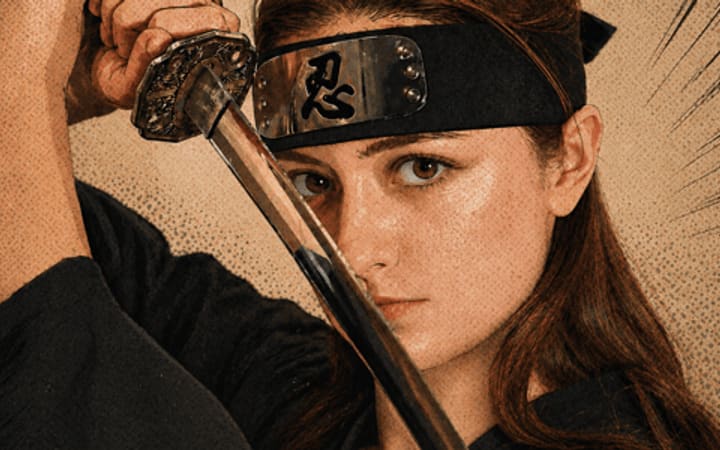
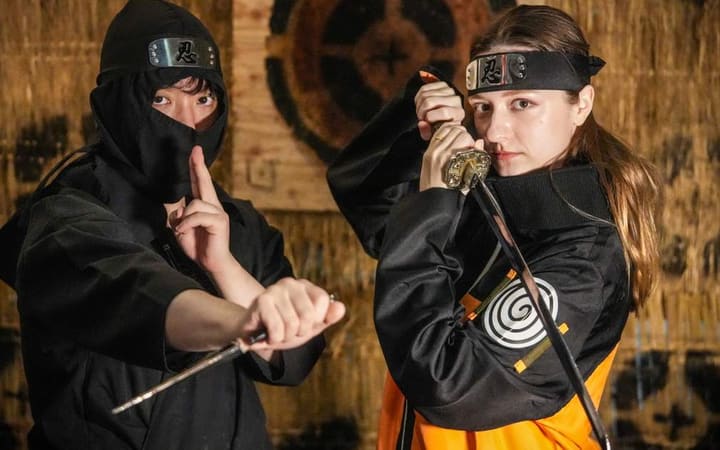
What you get there is practice rather than history: three short training sessions (sword, shuriken and blowdart) in a rented ninja costume, with photos. There's an optional add-on of sword training at nearby Jusenin Temple for an extra ¥1,300. The cafe opens 10:00–21:00, with irregular closing days.
Prices are the lowest option the platform shows, in US dollars, and move with dates and exchange rates. The booking page is final. Prices checked: September 28, 2026.
Which one? The museum if you want context and a guide who explains what you're holding; the cafe if the kids just want to dress up and throw things, especially later in the day.
Booking, walk-ins and cancellation
- Walk-ins are accepted. Booking online directly with MAIKOYA is 10% cheaper, and early April and mid-November are the times to book ahead.
- Hours aren't printed on the museum's own ticket page, so pick your slot on the booking calendar rather than trusting a map app.
- Booked on GetYourGuide or Klook: the platform's rules apply. The GetYourGuide basic ticket had free cancellation up to 24 hours before.
- Booked direct with MAIKOYA: full refund if you cancel 24 hours or more ahead, and nothing at all inside 24 hours. Private sessions are stricter still. Cancel by email only to cs@maikoya.com, with your booking number, name, email, date and time and headcount; a phone call or a social media message doesn't count.
That difference is the main reason we book this one through a platform. More on the company, its tea house and its fine print is in our MAIKOYA review.
Is it worth it?
For most visitors, yes, with the right expectations. It is a friendly, well-organized hour that makes samurai history stick, especially for kids, and it's one of the few things in Asakusa that works equally well in rain. It is not a deep museum, it runs on a timetable, and the hands-on gear is replica. Go on a weekday morning, arrive on time rather than early, and then walk east to Senso-ji for the temple the whole neighborhood grew up around.
What to pair it with
Because the museum sits on the Nishi-Asakusa side, it combines naturally with places most visitors never reach from the temple:
- Kappabashi, Tokyo's kitchenware street, starts a few blocks west. It runs about 800 meters with more than 170 shops selling knives, lacquerware and plastic food samples. Even on Sundays, roughly a third of the shops open, so it works as a weekend follow-up too.
- MAIKOYA's tea house at 1-12-2 Asakusa is about five minutes' walk away, which is why the combo ticket exists. A sword lesson in the morning and matcha in the afternoon makes a tidy culture day.
- A craft workshop. Chopstick-making, kintsugi and coin-ring studios are scattered around Asakusa; our tea ceremony and crafts guide lists the best-reviewed ones.
If you'd rather sit down to your cultural evening, compare it with the sumo show, which is a dinner, not a lesson.
Book the Samurai Ninja Museum tour from US$19.46 · GetYourGuide