
The best things to do in Asakusa at night cost nothing: walk through a lit Senso-ji, watch Nakamise's painted shutters come down, and stand on Azumabashi as Skytree lights up across the river. Add one paid thing if you want it: a rakugo night at Engei Hall, a cabaret show, a dinner cruise, or an evening in an izakaya. Most of old Asakusa closes by 19:00. But the temple is lit until about 23:00, and that gap between shop-closing and lights-out is the best time to be here.
What's open after dark
Two times to remember. 17:00: the main hall of Senso-ji closes. About 23:00: the lights go off. The temple lights come on at sunset, so in winter the lit hours start before 17:00, and in midsummer around 19:00.
Senso-ji after the crowds
The temple is lit every night from sunset to about 23:00. The illumination has run since October 2003 and covers Kaminarimon, Hozomon, the five-story pagoda and the main hall. With the day-trippers gone, it becomes a different place: quiet enough to hear the gravel, empty enough to photograph Hozomon's 450 kg lantern without a single person under it.
Walk it in order. Start at Kaminarimon, where the 700 kg red lantern glows against a dark gate. Then go up Nakamise. The shops close around 18:00–19:00, and when their shutters come down you see the Asakusa Emaki, a picture scroll painted across the shutters in 1989 under the direction of the artist Hirayama Ikuo. It is only visible when the street is closed, so most visitors never see it. Past Hozomon, the pagoda stands lit to the left and the main hall straight ahead.
The halls are shut, so there is no praying at the altar. You are here for the architecture and the calm.

The river: Azumabashi, the golden flame and Skytree
From Kaminarimon, walk east along Kaminarimon-dori past Kamiya Bar to the Sumida River and Azumabashi, the red bridge. From the Asakusa end you get one of Tokyo's classic views: Skytree lit in one of its color schemes, and in front of it Asahi Beer's golden flame on the Super Dry Hall.
The flame, the Flamme d'Or, was designed by Philippe Starck and finished in 1989 for Asahi's centenary. It is steel, about 44 m long and weighs about 360 tonnes. The gold glass tower beside it is Asahi's head office, built to look like a beer mug with foam on top. Both stand across the river in Sumida ward, not in Asakusa itself.
Skytree lighting alternates between named schemes. Iki is pale blue, Miyabi is Edo purple, and Nobori is a festival multicolor, with special lighting for seasons and events. If you want to go up, the observation decks are open until 22:00, with last entry at 21:00. Buy online: tickets bought at the tower counter cost ¥500 more each. Walking there from the temple over the river takes about 20 minutes. The prettier route is the Sumida River Walk, the footbridge beside the Tobu railway bridge, open 07:00–22:00. Trains pass right beside you on the way over. More on the riverbank is in our Sumida Park and river guide.
Loading live availability from GetYourGuide…
A yakatabune is a covered wooden party boat with tatami seating. The dinner cruise from Azumabashi pier is the most "old Edo" way to spend an evening here: two and a half hours of food and drink on the water under the lit bridges. Book at least ten days ahead if you want to keep the free cancellation. The retro night walk is the lighter option: 90 minutes around the lit temple and the back streets with a guide who knows the stories behind them.
Shows: rakugo, cabaret and popular theater
From the Meiji era, Rokku, the blocks west of the temple, was Tokyo's cinema and entertainment quarter, and it still has working theaters.
Asakusa Engei Hall is a yose, a variety hall where rakugo (a comic storyteller kneeling on a cushion) alternates with other variety acts. It is open every day of the year. The night show runs 16:40–21:00, with no audience changeover, so you can walk in at any time. Adults pay ¥3,500, and the late-entry "yowari" price drops to ¥2,500 after 18:00 and ¥2,000 after 19:00. Tickets are sold only at the window, from 11:00 on the day. Everything is in Japanese. Go for the atmosphere, the pacing and the audience's laughter rather than the jokes, and give it an hour.
Asakusa Kaguwa is the opposite: a non-verbal show built for visitors, with performers as oiran courtesans, geisha and samurai in about an hour of dance and stagecraft. It is on the 2nd floor of 1-12-10 Asakusa, about six minutes' walk from Asakusa Station. There are two shows on performance days, at 17:00 and 20:00, and a standard seat includes one drink. With thousands of reviews, it is one of the most-booked evenings in Asakusa and the easy choice for a first night in Tokyo.
Taishu engeki ("popular theater") is the local, unpolished cousin of kabuki. A touring troupe performs a period drama and a dance revue, all glitter, wigs and big emotions, to a loyal crowd of regulars. The home of it in Asakusa is Mokubakan, at Asakusa 2-7-5, a minute from the Tsukuba Express station. Its evening show starts at 17:30, and a same-day adult ticket is ¥2,100. It is in Japanese, but the dance half needs no translation.
For something more intimate, the geisha show adds shamisen music, a party game and matcha. It is a smaller-scale hour and a quarter that suits couples and families.
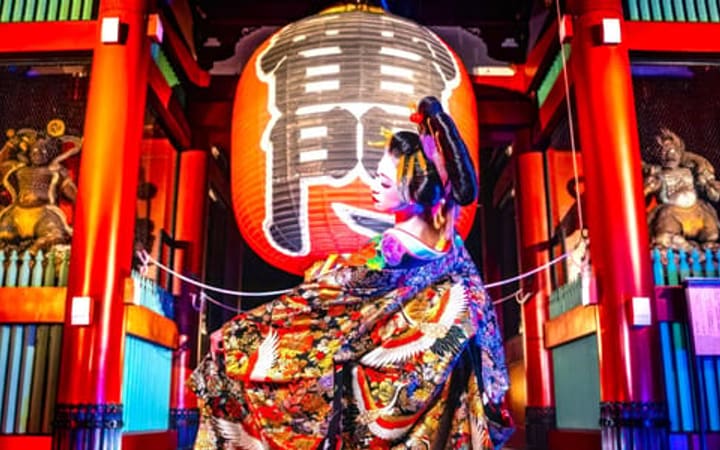
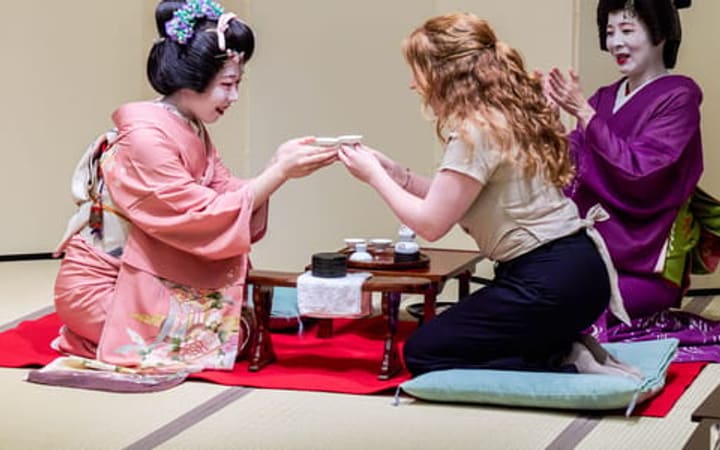
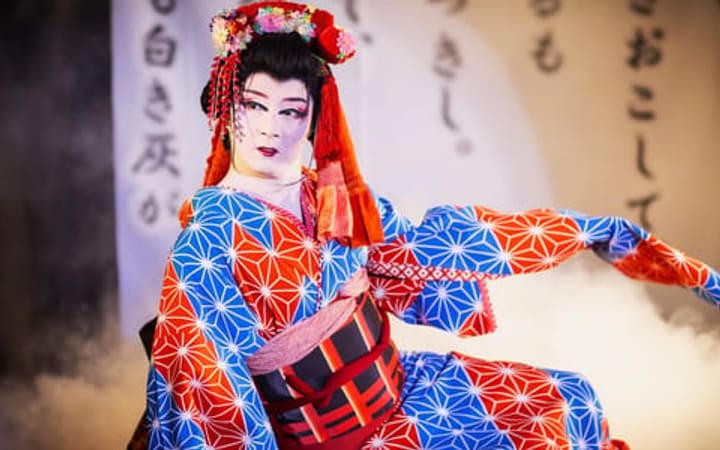
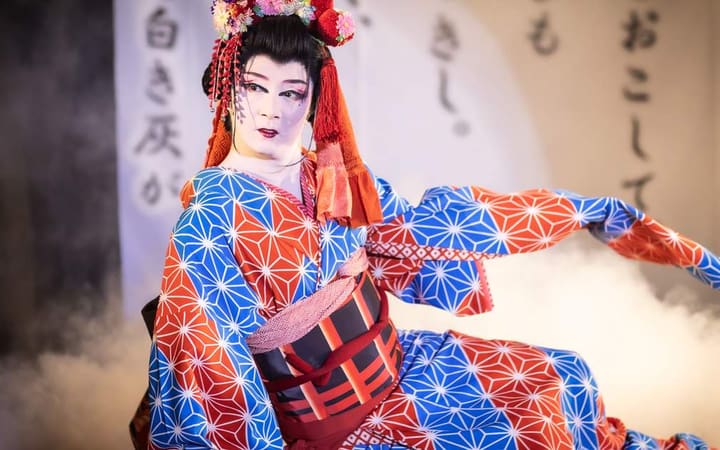
Prices are the lowest option the platform shows, in US dollars, and move with dates and exchange rates. The booking page is final. Prices checked: September 28, 2026.
Drinks and a late dinner
Kamiya Bar, on the corner by Azumabashi, calls itself Japan's first bar. It opened in 1880, took the Kamiya Bar name in 1912, and its 1921 building is a registered cultural property. The drink is Denki Bran, a brandy-based cocktail with gin, wine, curaçao and herbs at 30% (the "Old" is 40%). The catch is the hours: last order is 19:30, and it is closed on Tuesdays plus two Mondays a month. The first floor is buy-a-ticket-at-the-door and cash only; the upper floors take cards.
Hoppy Street is the obvious second stop: open-air izakaya west of the temple serving beef-tendon stew with Hoppy and shochu until about 21:00–23:00. Bring cash.
For a proper dinner, Asakusa Imahan serves sukiyaki until a 20:30 last order; the latest bookable start is 19:00. See our Imahan review. For a guided version of the evening, the food-and-drink tours in our food guide work through the izakaya for you.
After 23:00 the neighborhood is mostly dark. The one bright exception is the 24-hour Don Quijote Asakusa in Rokku, for snacks, souvenirs and cosmetics at midnight.
A night in Asakusa, three ways
| If you have | Do this |
|---|---|
| 2 hours, free | Tourist Center terrace at dusk → Kaminarimon → Nakamise shutters → lit temple → Azumabashi for Skytree and the flame |
| An evening, on a budget | Engei Hall from 18:00 at the yowari price → nikomi on Hoppy Street → lit temple before 23:00 |
| An evening, a treat | Kamiya Bar by 19:00 → Kaguwa 20:00 show, or the yakatabune dinner cruise → a late walk through the lit temple |
- Tourist Information Center
- Kaminarimon
- Nakamise-dori
- Senso-ji Main Hall
- Hoppy Street
- Asakusa Engei Hall
- Kamiya Bar
- Azumabashi Bridge
- Asahi 'Flame'
Photographing Asakusa after dark
The lit temple is the easiest night photography in Tokyo, because the lighting is designed for it. A few things help. Shoot Kaminarimon from the Tourist Center side of the road, where you can fit the whole gate and lantern in the frame. On Nakamise, walk to the middle of the street and look back toward the gate: the closed shutters and the lit lanterns line up in a long, empty perspective. At Hozomon, stand to one side and you can frame the pagoda through the gate. For Skytree with the golden flame, the Asakusa end of Azumabashi is the spot, and the half-hour after sunset gives the deepest blue sky. Be considerate: people still come to pray at night, so keep the steps of the main hall clear.
Practical notes
- Seasons. On winter evenings the lights come on around 16:30, so you can see the temple lit and still make Kamiya Bar. In summer, sunset is late, so do the izakaya first and the temple last.
- Festivals. On the Sanja Matsuri weekend in May and on New Year's Eve the temple is crowded at night, and at New Year the temple has used a one-way route. Pick another night if you want quiet.
- Trains. The Ginza Line, Toei Asakusa Line and Tobu station are all by Kaminarimon, a few minutes from the lit temple. The Tsukuba Express station is out west by Rokku, handy after a show. More in getting there.
- Rain. The temple at night in light rain, with reflections on the wet stone, is one of the best photos in Tokyo. Take an umbrella and go anyway.
- Families. An early evening works well with kids: the lit gate, the river, and Skytree before 21:00. See our Asakusa with kids guide.
Book the Asakusa-Kaguwa show from US$48.97 · GetYourGuide