
Asakusa packs a dozen tea rooms and craft studios into the streets around Senso-ji, most of them within a few minutes of Kaminarimon and the rest on Kappabashi. The short answer: if you want matcha with ceremony, book a 45- to 90-minute session at a dedicated tea house. If you want something to take home, make chopsticks, a coin ring or a piece of kintsugi in under an hour. If you have a whole afternoon, cut a kiriko glass or sculpt a candy rabbit.
Below we sort them by how much time and patience they ask of you, then put everything in one table so you can match a workshop to the gap in your day.
Prices are the lowest option the platform shows, in US dollars, and move with dates and exchange rates. The booking page is final. Prices checked: September 28, 2026.
Tea ceremony: three ways to sit down for matcha
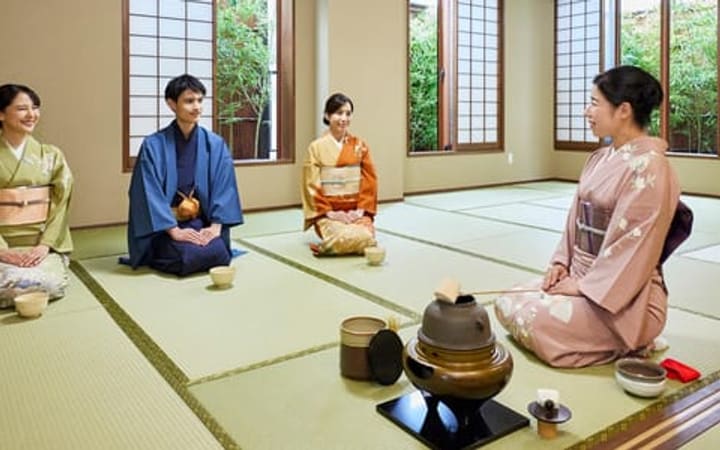
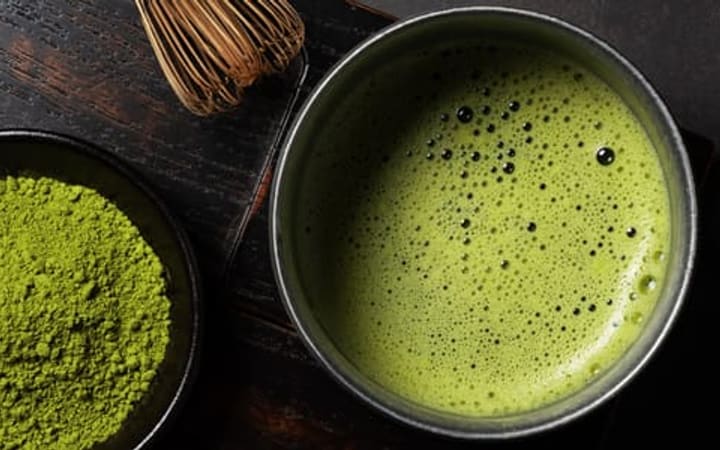
A Japanese tea ceremony is slow on purpose. The host cleans each utensil in a set order, whisks the tea, and you learn how to receive and turn the bowl before you drink. Expect to eat a small sweet first, because the sugar balances the bitterness of thick matcha. Nobody expects you to know any of this beforehand, and the venues below explain each step in English as you go.
The full version, in kimono
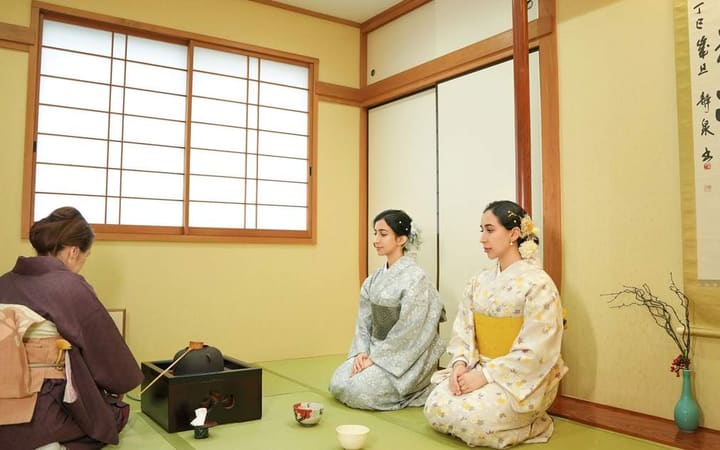
Kimono Tea Ceremony MAIKOYA Asakusa is at 1-12-2 Asakusa, a six-minute walk from Exit 1 of the Ginza Line station. Its kimono ceremony costs ¥7,700 including tax and takes about 90 minutes, with dressing included; the same ceremony in your own clothes is ¥4,400 and wraps up in about an hour. It also runs a two-hour version where you make wagashi sweets first (¥13,200). Booking online on MAIKOYA's own site takes 10% off. There are two rules to know before you book: children under 7 are not allowed in the tea house, and direct bookings cancelled inside 24 hours get no refund at all. Cancellations must go by email, not phone. Our MAIKOYA review covers the company in more detail, including its samurai museum five minutes away.
Chazen Asakusa is the smaller alternative, on the 5th floor of the Benkyodo Building at 1-4-7 Asakusa, about two minutes from Kaminarimon. Its 45-minute shared ceremony costs ¥3,500, the cheapest proper ceremony we found in the neighborhood. With kimono it is ¥8,000 and takes about two hours for two people, because you are dressed at a partner shop five minutes' walk away. Sessions start on the hour from 10:00 to 17:00 (kimono sessions last start at 15:00). Chazen's cancellation terms bite earlier than most: 50% from seven days out, 100% from the day before.
On the booking platforms, the kimono ceremony is sold by both GetYourGuide and Klook. Compare what each includes, because hair styling and photos vary by option.
Same experience, two platforms
Asakusa: Kimono Tea Ceremony with Matcha and Sweets
from US$53.42
★ 4.9577 reviewsView on GetYourGuide →Asakusa Kimono & Tea Ceremony Experience
from US$35.75
★ 4.8209 reviewslower price todayView on Klook →The relaxed version, on chairs
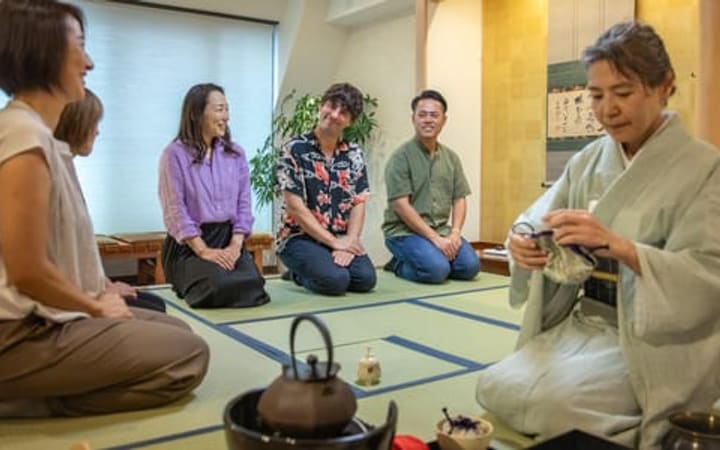
GetYourGuide's "Tea Ceremony Experience in Asakusa" takes place at Tokyo Tourist Lounge Asakusa and is run by Localized, the same company behind the most-reviewed Asakusa walking tour. It lasts an hour, has chairs so nobody has to kneel, and focuses on whisking your own matcha while the host explains what each step means. It is the one we point first-timers to, especially anyone with stiff knees or a tight schedule.
Matcha and mochi, for families
The matcha-making class with mochi sweets is the least formal of the three. You whisk, you eat, you ask questions. It suits families: an hour is about as long as most children will sit still, and there is no ritual to get wrong. Check the listing's age rules before you book. If you also want to wear a kimono for the afternoon, several kimono rental shops bundle a matcha session with the dressing.
Crafts you can finish in under an hour
These are the workshops most people fit between the temple and lunch. All three have hundreds to thousands of reviews on each platform, which usually means a well-drilled format.
Chopsticks
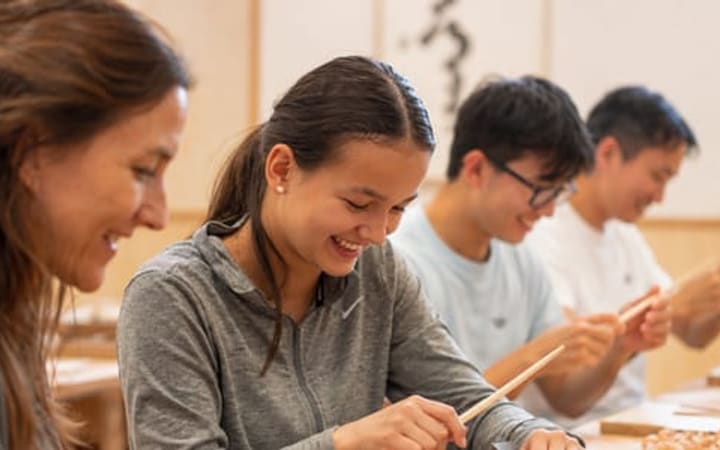
The Asakusa chopstick workshop is the quickest craft here at about 35 minutes. You choose a wood, shape it with traditional hand tools and leave with a pair you finished yourself. It is also the cheapest workshop on this page and one of the easiest to do with children. GetYourGuide and Klook both sell it with very similar review counts, so let the price decide.
Same experience, two platforms
Tokyo Asakusa Chopsticks Workshop: Make Your Own Pair
from US$6.36
★ 5.01,801 reviewslower price todayView on GetYourGuide →Kintsugi
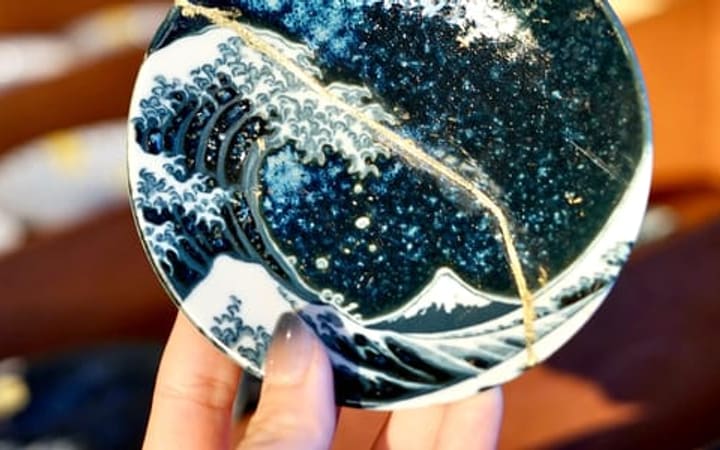
Kintsugi is the art of mending broken ceramics with gold, so the crack becomes the decoration. The Asakusa class takes about 45 minutes and you take the repaired piece home. Traditional kintsugi uses urushi lacquer that needs weeks to cure, so a class this short almost certainly uses a faster modern method. That's fine for an ornament, but ask whether your piece is safe for food and drink before you use it. Klook and GetYourGuide both list an Asakusa kintsugi class; check that the options you compare include the same size of piece.
Same experience, two platforms
Tokyo: Traditional Kintsugi Gold Repair Workshop in Asakusa
from US$24.48
★ 4.91,062 reviewsView on GetYourGuide →Kintsugi Golden Repair Workshop in Asakusa
from US$8.39
★ 5.0326 reviewslower price todayView on Klook →Coin rings
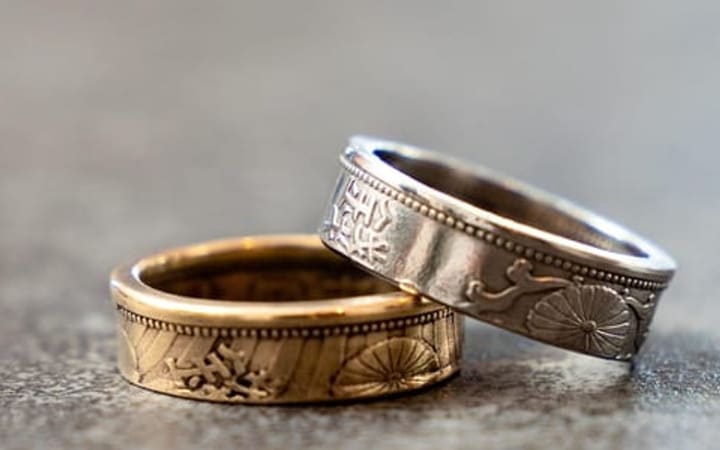
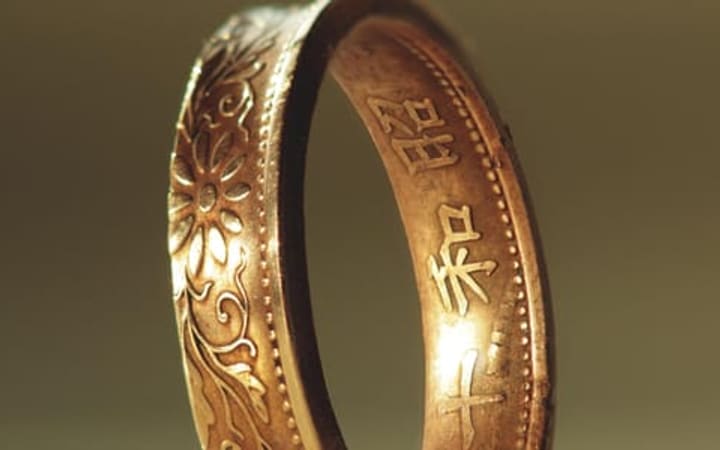
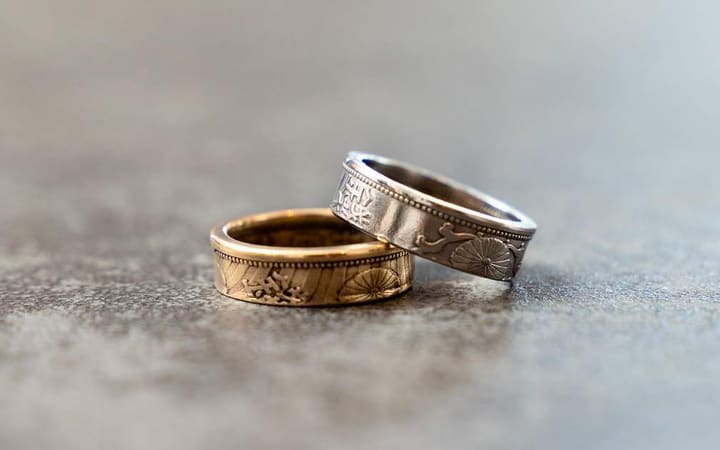
You turn a vintage coin into a ring in about 45 minutes, start to finish, with an instructor at your elbow. The biggest GetYourGuide listing is run by Traveling Tokyo, and it no longer says "Asakusa" in its title. It has two meeting points depending on the option, so confirm yours is in Asakusa before building a day around it. Reviewers also ask for clearer information on optional fees: rare and premium Japanese coins cost extra, so decide your budget before you start browsing the coin tray. Sizes run from Japanese size 1 to 23.
If you want the Asakusa address guaranteed, the "Turn a Japanese Coin into a Ring and Charm" workshop names Asakusa in its title, takes an hour and adds a matching necklace charm. There is also an independent studio, EnRing, on the 3rd floor of 2-20-6 Nishi-Asakusa, which runs 60-minute reservation-only sessions with Japanese coins it says were blessed at Zeniarai Benten Shrine.
Prices are the lowest option the platform shows, in US dollars, and move with dates and exchange rates. The booking page is final. Prices checked: September 28, 2026.
Longer crafts for a slower afternoon
Knife craft and sharpening
The Asakusa knife workshop lasts about 40 minutes and is the most expensive craft on this page. In that time you are not forging steel from scratch: the class covers the fundamentals, sharpening included, and you leave with your own knife. It makes the most sense paired with a walk up Kappabashi, the kitchen-tool street about 800 m long with more than 170 shops, where you can see what the professional versions look like. Remember that the knife has to go in your checked bag for the flight home.
Edo kiriko cut glass
Kiriko is the cut-glass craft of old Tokyo. You score a pattern into colored glass on a grinding wheel. Glass Factory Sokichi, about two minutes from Kaminarimon, runs a 1.5-hour class; a Japanese booking site listed it at ¥3,630 for adults and ¥2,750 for children, with color-cased glass costing extra. GetYourGuide sells the same Sokichi class, though with only a couple of reviews so far. A second studio, Kiriko Kobo Asakusa Ojima, at 4-49-7 Asakusa, takes phone bookings only, for 40- to 90-minute sessions between 9:00 and 17:00.
Amezaiku candy sculpture
Asakusa Amezaiku Ameshin is the most unusual workshop here: you pull and snip hot sugar into a rabbit with scissors, working against the clock before it sets. The Hanakawado studio (2-9-1 Hanakawado, about eight minutes from Kaminarimon) is open 10:30–18:00 and closed Thursdays. The workshop costs ¥3,100 for adults and ¥2,500 for children of high-school age and under, and it takes 1.5–2 hours. Parents joining with a child also pay ¥2,500, and a preschooler can share a parent's booking. Bring ¥300 for a box to carry your rabbit home. The teaching is mainly in Japanese, supported by written instructions and English-subtitled videos. Once a booking is confirmed, the full fee is charged if you cancel.
Orinami hand weaving
At Orinami (2nd floor, 2-8-4 Hanakawado, about three minutes from Senso-ji) you weave a small omamori charm bag on a hand loom, choosing from 24 colors of yarn, then add a cord, a patch and a written wish. It takes about an hour and is listed as suitable from about age 3. Two warnings: you take your shoes off at the foot of a steep staircase, and there is no waiting area, so arrive no earlier than five minutes before your slot.
Food samples at Kappabashi
Japan's plastic menu dishes are a craft in their own right, and the place to try it is Ganso Shokuhin Sample-ya at 3-7-6 Nishi-Asakusa on Kappabashi, five minutes from Exit A2 of the Tsukuba Express station. Its reservation-only workshop costs ¥3,300 per person and takes about 40 minutes: you make wax tempura and a head of lettuce with the traditional dipping technique. Children from the first grade of primary school can take part, and non-participants can watch for ¥500. The shop is open 10:00–17:30 with no regular closing day.

GetYourGuide's food-sample workshop is a different format: you choose a full dish such as omelette rice or spaghetti, and it runs 1–1.5 hours. It suits older children who want a bigger souvenir, though it has far fewer reviews so far than the other crafts on this page.
Every workshop side by side
Price bands are relative to one another; where a studio publishes its own yen price, we show that instead. The booking cards above show live prices.
| Workshop | Time | Price band | Kid-friendly | You take home |
|---|---|---|---|---|
| Chopsticks | 35 min | Low | Yes | Your own pair of chopsticks |
| Matcha & mochi | 1 h | Low | Yes | Nothing but a full stomach |
| Coin ring | 45 min | Low, plus coin fees | Check listing | A ring |
| Coin ring & charm | 1 h | Mid | Check listing | Ring and necklace charm |
| Kintsugi | 45 min | Mid | Check listing | Gold-repaired ceramic |
| Casual tea ceremony | 1 h | Mid | Ask | Nothing |
| Chazen tea ceremony | 45 min | ¥3,500 | Ask | Nothing |
| MAIKOYA kimono tea ceremony | 90 min | ¥7,700 | No under-7s | Your own photos in kimono |
| Kiriko glass (Sokichi) | 1.5 h | Mid | Yes, child price | Your cut glass |
| Orinami weaving | 1 h | Mid | From about 3 | Woven charm bag |
| Amezaiku (Ameshin) | 1.5–2 h | ¥3,100 | With a guardian | Candy rabbit |
| Food sample (Kappabashi) | 40 min | ¥3,300 | From first grade | Wax tempura and lettuce |
| Knife craft | 40 min | High | Check age limit | A knife (checked bag) |
How to fit a workshop into an Asakusa day
Most workshops cluster in three pockets. MAIKOYA, Chazen and Sokichi are a few minutes from Kaminarimon. Orinami and Ameshin are in Hanakawado, between the temple and the river. The food-sample shop and the kitchen-knife shops are on Kappabashi, about 13 minutes' walk west of the Asakusa stations. Choose one pocket and build the day around it rather than zig-zagging.
Book the morning for the temple and the afternoon for the workshop. A 14:00 workshop also means you are indoors during the hottest part of a summer day, and the Nakamise snack stalls are all open by the time you come out.
If it rains, a craft workshop is the best thing Asakusa offers. Keep one of the under-an-hour options in reserve and book it the evening before once you have seen the forecast. With children, pair a workshop with our Asakusa with kids ideas. After a tea ceremony, walk it off with a guided walk of the back streets, or go straight to lunch.
On platforms, the tea ceremonies and crafts on this page mostly come from GetYourGuide, with Klook selling several of the same workshops. The direct studios, Chazen, Ameshin, Ojima and the Kappabashi sample shop, take bookings on their own sites or by phone.
Book the kimono tea ceremony from US$53.42 · GetYourGuide