
If you searched for the Asakusa Sumo Club, here is the short version: it is a two-hour dinner show on the ground floor of the ROCK-ZA building in the Rokku Broadway arcade, a couple of doors from the Asakusa Don Quijote. You eat chicken chanko nabe (the hot pot wrestlers live on), watch retired professionals and student wrestlers demonstrate the basics, and a few guests, chosen by lottery if too many volunteer, get to push one of them around the ring. It runs four times a day, costs ¥16,000 for a standard seat booked direct, and it is honest about what it is: a show, not a stable.
That last point matters, because "sumo in Tokyo" covers three very different things, and people regularly book the wrong one. This page walks through the club evening properly, then sets it next to the two real alternatives: watching a stable's morning practice, and a tournament day at Ryogoku Kokugikan.
Prices are the lowest option the platform shows, in US dollars, and move with dates and exchange rates. The booking page is final. Prices checked: September 28, 2026.
What the Asakusa Sumo Club actually is
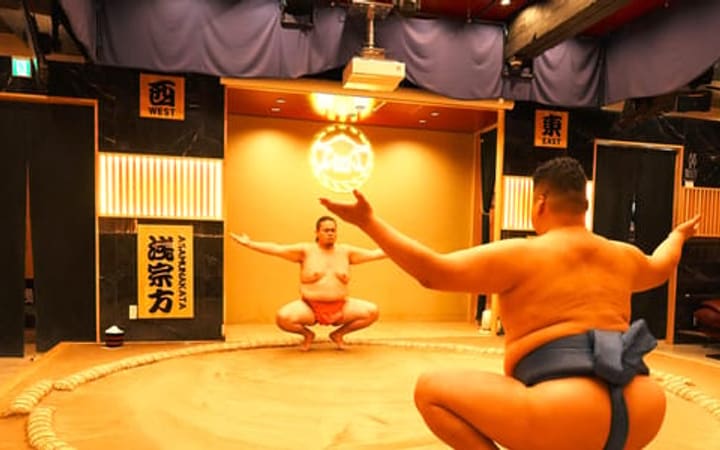
The company behind it is Asakusa Sumobeya Co., Ltd. ("sumobeya" is the Japanese word for a sumo stable, which is where some of the naming confusion starts). In English the venue calls itself the Asakusa Sumo Club, and on some pages the Asakusa Sumo Stable. They are the same place. The same company runs a second, more upmarket venue called the ANNEX nearby at 2-11-7 Asakusa, in a basement, and a sister venue in Kyoto.
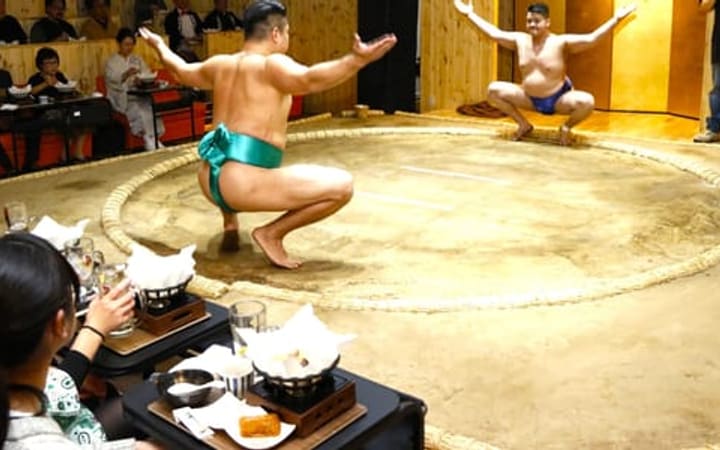
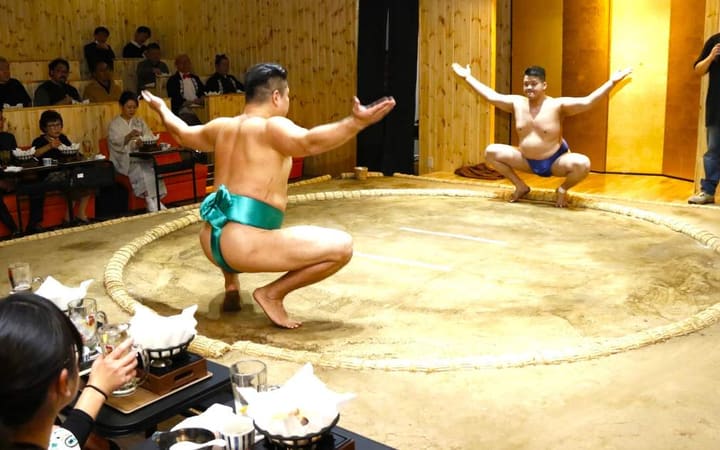
The main room has 76 seats around a ring built from Arakida clay, the same clay used at Ryogoku Kokugikan. It is small enough that nobody is far from the action, which is the whole appeal: you will not get this close to a charging heavyweight anywhere else without a press pass.
What it is not: a working heya. Nobody lives or trains here. The operator says so plainly in its own listing, describing it as an "entertainment show performed by retired sumo wrestlers" and pointing people who want the serious version toward a morning practice tour. We appreciate that. It also tells you how to judge it: as a lively dinner with a good teacher, not as a window into professional sumo.
The club guards its format closely. Its website says the name, logo and show format are trademarked and warns imitators off, which is unusual for a restaurant but explains why other "sumo shows" in Tokyo look slightly different.
Two hours, in order
The official running order is simple, and knowing it helps you time the evening.
| Part | Roughly how long | What happens |
|---|---|---|
| Opening and chanko | 40 min | A geisha dance opens the show; then the hot pot arrives and refills keep coming |
| Demonstration | 20 min | Former pros and student wrestlers demonstrate the basics, ending in a best-of-three bout |
| Audience challenge | 40 min | Volunteers put on a costume and try their luck; photos on the ring |
| Q&A | the rest | Ask the wrestlers anything: diet, rank, how much they sleep |
A bilingual MC runs the whole thing in English and Japanese, so you will not need to know a word of sumo vocabulary. You leave with a printed photo with the wrestlers and a small souvenir set.
Be aware of one recurring criticism. Some reviewers found the actual wrestling short (one put it at about five minutes of real bouts) and the whole thing "more like a joke than real sumo". That is a fair description of a show designed for people who have never seen sumo, pitched at families and first-timers. If you already follow the sport, you will enjoy the Q&A more than the bouts.
The chanko, and who should check the menu first
Chanko nabe is the stew sumo stables cook every day, and here it is a soy-based chicken version built on four stocks (chicken, bonito, kelp and shiitake), supervised by a former chanko-ban, the wrestler whose job in a stable is to cook. Around it come inari sushi, karaage fried chicken, edamame and dessert, all you can eat, and your first drink is included.
Opinions on the food split. Plenty of guests love it; a steady minority call it "very average" and too expensive for what it is. Our view: it is a good, filling home-style hot pot, not a restaurant meal you would cross town for. Eat it as part of the show.
Dietary rules are strict enough to plan around:
- Vegetarian or vegan: request it when you book; GetYourGuide asks for at least two days' notice.
- Gluten-free: not available.
- Halal: not available. You may bring your own food.
- Babies under 1: not admitted on the GetYourGuide listings.
Getting into the ring: the lottery
This is the part everyone asks about. Yes, guests can wrestle. They put on a costume, square up in the ring, and try to shift a professional who is very good at not being shifted. But only a handful of people get to do it at each show. When more hands go up than there are places, the challengers are drawn by lottery; one visitor counted eight guests picked on the night.
So if stepping into the ring is the only reason you are going, know that it is not guaranteed at any seat level. There is photo time on the ring afterwards, which for most people is the shot they actually wanted.
Seats, prices and the ANNEX
Booked direct on the club's website, prices are per person:
| Seat | Direct price |
|---|---|
| Standard | ¥16,000 |
| VIP (front row) | ¥20,000 |
| Children under 12 | ¥12,000 |
The club's legal notice gives a range up to ¥60,000 for its top package. Shows start at 12:00, 15:00, 18:00 and 20:30, and one booking can cover up to 20 people. The club closes on irregular days, so check that your date is open before you plan an evening around it.
The ANNEX is the same format dressed up. It has three classes (economy, business and first), the menu adds wagyu sukiyaki to the chanko, and the higher classes add tempura and free-flowing drinks, with Yamazaki whisky in first class. It is sold on GetYourGuide as the "Luxury Sumo Show", under a company named ANNEX Co., Ltd. Reviews are a notch below the main show, and one Tripadvisor review of the luxury package was headed "Tourist trap – to avoid", which is harsh but worth knowing if you are paying extra for the upgrade. Our advice: the upgrade buys you food and drink, not better sumo. Take the ANNEX if you want dinner and the show in one go; otherwise the standard show is the better value.
Direct, GetYourGuide or Klook?
The main show is sold everywhere: GetYourGuide (where it is the top-ranked product in all of Asakusa, with more than 8,000 reviews when we checked), Klook, Viator and others. It is the same show at the same venue whichever you choose. What differs is the price on your date and the refund terms.
Same experience, two platforms
Tokyo: Sumo Entertainment Show with Chicken Hot Pot & Geisha
from US$101.75
★ 4.88,441 reviewssame priceView on GetYourGuide →Asakusa Sumo Club: sumo show with chicken chanko hot pot
from US$101.75
★ 4.81,641 reviewssame priceView on Klook →A few points to decide on:
- Refunds. Direct bookings can be cancelled until the day before. GetYourGuide's listing allows free cancellation up to 24 hours ahead. Klook sets terms per listing, so read the line above the book button.
- Price. Online platforms price in your currency, so whether they beat the ¥16,000 direct rate depends on the exchange rate that week. The box above shows today's numbers.
- Seat choice. GetYourGuide lets you pick a standard seat at the main store or at the ANNEX, a VIP front row, or a front-row sofa, so read the option name before paying.
Our full take on the company, including where it falls short, is in the Asakusa Sumo Club review. For how the two booking platforms compare in general, see our GetYourGuide review and Klook review.
Show, stable or stadium?
Here is how the club compares to the two real ways to see sumo in Tokyo.
| Asakusa Sumo Club | Stable morning practice | Tournament at Kokugikan | |
|---|---|---|---|
| Where | Rokku, Asakusa | Stables, mostly around Ryogoku | Ryogoku Kokugikan |
| When | Four shows a day, irregular days off | Early morning, ending around 9:00–10:00 | January, May and September, 15 days each |
| What you see | Demonstration and a show bout | Active wrestlers training hard | Real ranked bouts all afternoon |
| Talking, eating | Encouraged | Silence; no food or drink | Normal stadium rules |
| Kids | Fine from age 1 | Some tours exclude under-11s | Check the ticket rules |
| Wrestle yourself | By lottery | No | No |
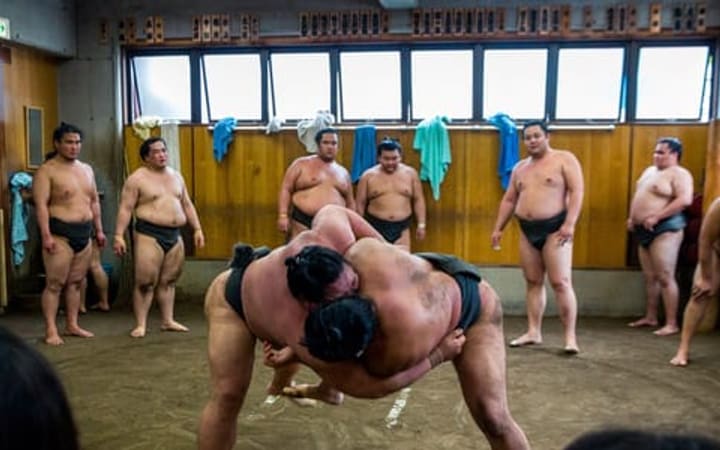
Morning practice (keiko). This is where you see sumo as it really is: grunting, slapping, sweating men repeating the same drills. Visiting is not casual. The sumo club itself sums up the rules at a real stable: no talking, no eating, no video (photos are allowed), and sitting on the floor for over an hour, sometimes up to three. Other etiquette usually cited: no flash, don't point the soles of your feet at the ring, and stay to the end. That is why most visitors go with a guide.
One guided option is a morning practice tour sold on GetYourGuide by Japan Wonder Travel. You meet early in the morning (check the meeting time and place on your booking), watch practice at a stable in the Ryogoku area, and stay until it ends, around 9:00–10:00. The rules are strict: no children under 11, no hats, sunglasses, food, drink, flash or video, and modest clothes. It is not suitable for people with limited mobility, since you sit on the floor and can't move around once practice starts.
Book a guided sumo morning practice from US$101.75 · GetYourGuide
Tournaments (basho). Tokyo hosts three of the six annual grand tournaments at Ryogoku Kokugikan: in January, May and September, 15 days each. The other three are in Osaka (March), Nagoya (July) and Fukuoka (November). Tickets for Tokyo go on sale about a month before each one. If your trip overlaps, this beats any show.

On a non-tournament weekday, the free Sumo Museum on the ground floor of Kokugikan is a good consolation prize: open 10:00–16:30 (last entry 16:00), two minutes from the west exit of JR Ryogoku station. It is closed on Saturdays, Sundays and holidays, and during Tokyo tournaments you need a sumo ticket to get in. Our nearby guide covers Ryogoku, including the Edo-Tokyo Museum next door.
Our pick, and how to fit it into a day
- You have never watched sumo, you want dinner, and you're with kids or a group: the Asakusa Sumo Club. The 18:00 show fits neatly after an afternoon at Senso-ji and Hanayashiki, which are both a short walk away.
- You care about the sport: a guided morning practice, then the Sumo Museum if it's a weekday.
- You're in Tokyo in January, May or September: get a tournament ticket and skip the show.
Finding the club can be the tricky part; even a GetYourGuide reviewer said it was "tricky to find at first". Head for the tall Don Quijote building on the Rokku side and walk into the Rokku Broadway arcade; the ROCK-ZA building is a couple of doors along.
If you choose the 20:30 show, you'll come out after 22:00, and the late-night options are covered in Asakusa at night. Families will find more ideas in Asakusa with kids, and anyone who'd rather eat without a wrestler at the table should read our food guide.
Check dates for the Asakusa Sumo Club show from US$101.75 · GetYourGuide