
There are three ways to see Asakusa with someone who knows it: a paid two-hour guided walk, a free tour with volunteer guides, or a self-guided route. Most paid tours cover the same core, Kaminarimon, Nakamise, Senso-ji and Asakusa Shrine, and differ in group size, pace and where they finish. The free tours are real and good, but they only run on certain days and can be cancelled. Here is how to choose, and a route to follow if you would rather go alone.
The paid Senso-ji walks, compared
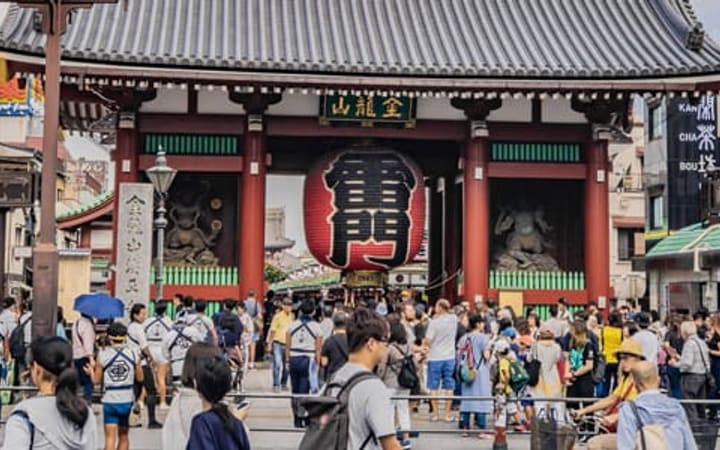
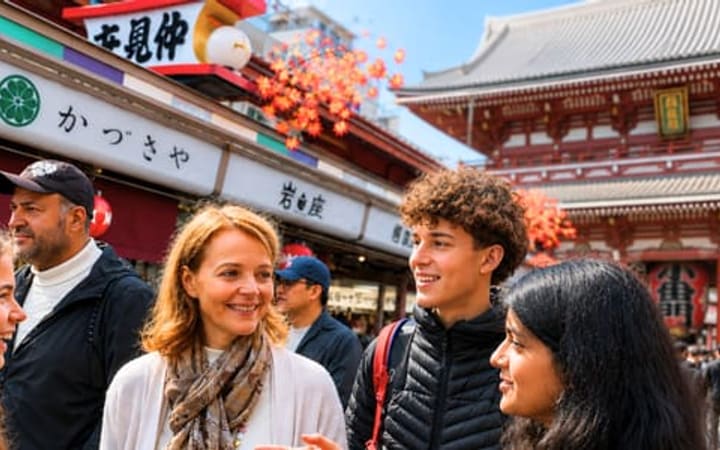
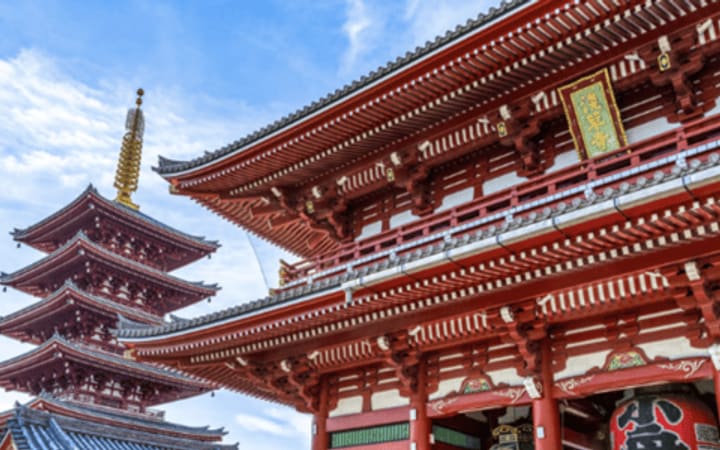
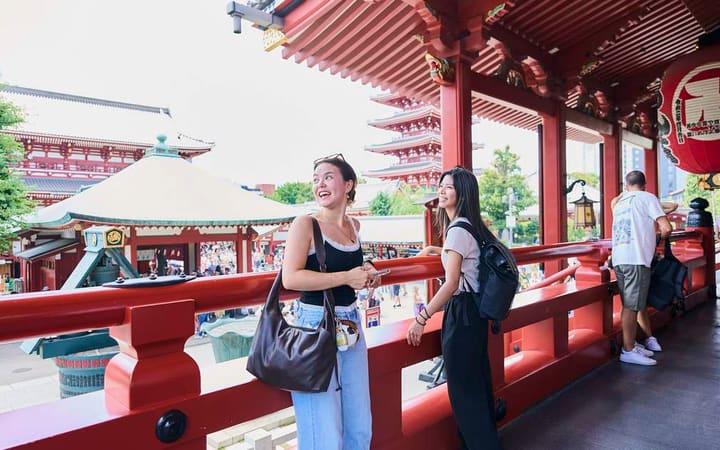
Most of the Asakusa tours on GetYourGuide follow roughly the same two-hour loop around the temple. The one with by far the most reviews is Localized's Asakusa Walking Tour with Sensoji Temple Visit, which runs in English and Spanish and is wheelchair accessible. You meet outside the Tokiwado Kaminari-okoshi main store, the rice-cracker shop founded in 1816 right next to Kaminarimon, and walk:
- Kaminarimon and its 700 kg lantern
- Nakamise-dori, the temple's shopping approach
- Senso-ji, with about 30 minutes including free time
- Asakusa Shrine, the Shinto shrine beside the main hall
- Hoppy Street, the lane of stew-and-shochu bars
- Shin-Nakamise, the covered arcade
It finishes near Azuma Bridge, which is handy if you are going on to the river or Skytree.
Prices are the lowest option the platform shows, in US dollars, and move with dates and exchange rates. The booking page is final. Prices checked: September 28, 2026.
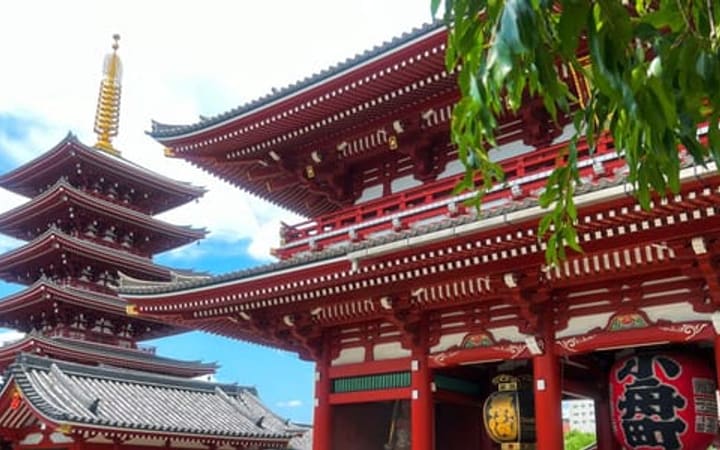
The others differ mostly in emphasis. Temples, Traditions, and Back Streets adds Denboin-dori, the Edo-style shopping street west of Nakamise, alongside Hoppy Street. The Highlight Tour, as its title says, leans on tradition and religion, which is useful in a precinct where a Buddhist temple and a Shinto shrine stand side by side. The Highlight Tour and the two cheaper Asakusa-and-Senso-ji walks sit at the budget end of the list. Senso-ji was founded in 628 according to temple tradition, and it is usually called Tokyo's oldest temple.
Klook sells an Asakusa and Senso-ji walking tour too, similar in name and scope to GetYourGuide's two-hour walks. Compare the meeting point and group size before you choose on price.
Same experience, two platforms
Tokyo: Asakusa and Sensoji Walking Tour
from US$12.72
★ 4.9921 reviewslower price todayView on GetYourGuide →What two hours with a guide adds is context you cannot get from signs. You learn that the Kaminarimon you are photographing dates from 1960, a gift from the founder of Panasonic after the gate had been missing for 95 years. You learn that the main hall is a 1958 concrete rebuild of the 1649 hall lost in the 1945 air raids. And you find out why so many people draw a bad fortune at the omikuji boxes: Senso-ji keeps the traditional ratio, which includes a lot of kyō slips. Our Senso-ji guide has more of this if you want to prepare.
Tours that go beyond the temple
Two hours is enough for Senso-ji. If you want to understand the wider old town, pick a longer tour.
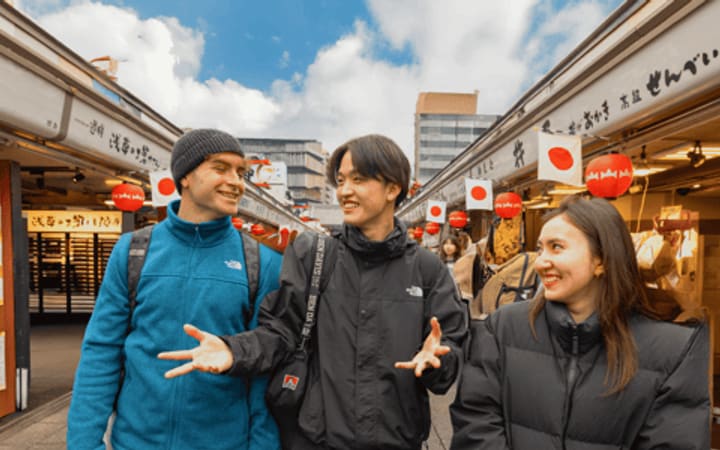
- Asakusa, Kappabashi and Ueno (3 hours) adds Kappabashi, the kitchen-tool street about 800 m long with more than 170 shops, and continues to Ueno. Ueno is three stops from Asakusa on the Ginza Line, so walking it gives you a sense of how close these districts are. Its rating is the lowest on this page, so read recent reviews.
- Asakusa with Sensoji, Skytree and Snacks (3 hours) crosses the Sumida River. On foot, Skytree is about 20 minutes from Senso-ji via the Sumida River Walk footbridge, which is open 07:00–22:00.
- Asakusa, Ueno and Yanaka Private Old Tokyo Walk (4 hours) takes in Nezu and Yanaka's temple lanes as well, at your own pace. It has only a handful of reviews so far.
- Private Walking Tour with a Local Guide (4 hours) is Tokyo-wide and built around what you ask for. It costs the most of anything on this page, and makes sense if you want one guide for a whole morning.
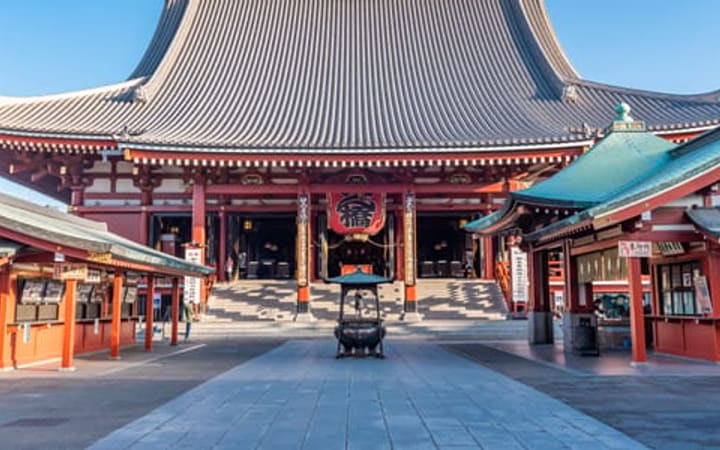
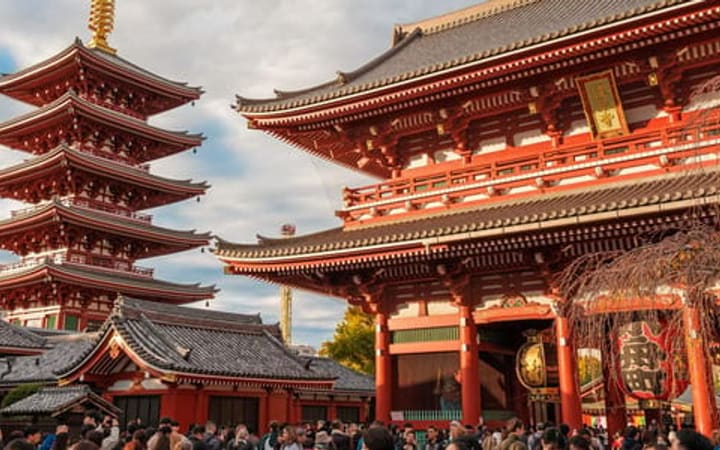
Prices are the lowest option the platform shows, in US dollars, and move with dates and exchange rates. The booking page is final. Prices checked: September 28, 2026.
For more on the neighborhoods these tours reach, see places near Asakusa.
Bike and e-bike tours
Asakusa is small enough to walk, so a bike tour only makes sense if you want to cover more of Tokyo in one go. The two bike tours with real review histories, the Tokyo Top Highlights 3h Guided E-bike Tour and the 3-Hour Bike or E-Bike Tour, are city-wide: the e-bike tour passes Tokyo Station and the Imperial Palace, and the other covers central Tokyo rather than staying in Asakusa. Read the route before booking, because the meeting point may not be in Asakusa at all.
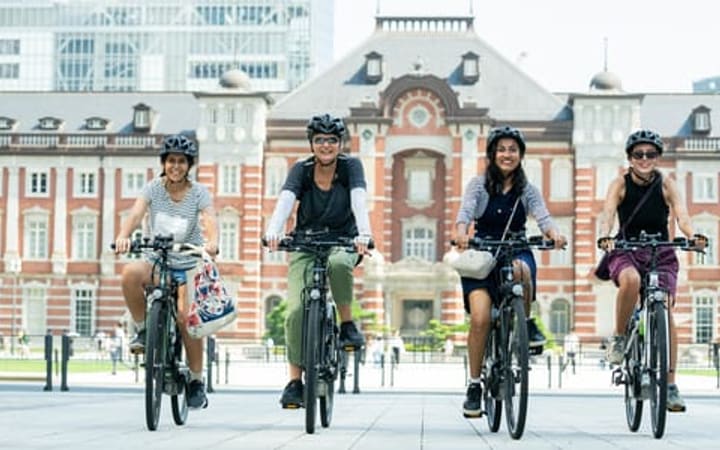
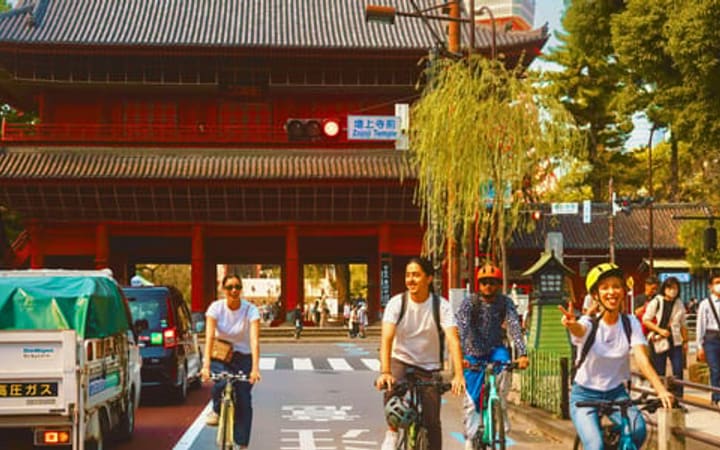
Prices are the lowest option the platform shows, in US dollars, and move with dates and exchange rates. The booking page is final. Prices checked: September 28, 2026.
GetYourGuide also lists a handful of Asakusa-only private bike tours, some combined with a wind-chime or notebook-making workshop, but they are new and have almost no reviews yet. If you ride on your own, remember that bikes must be pushed across the Sumida River Walk.
Free guided tours
Tokyo SGG Club
The Tokyo SGG Club is a group of volunteer interpreter-guides who run free English tours of Senso-ji and its surroundings under the sponsorship of the Taito City Office. Tours last about 90 minutes and need no reservation. Meet at the SGG counter on the ground floor of the Asakusa Culture Tourist Information Center, directly opposite Kaminarimon, about ten minutes before the start.
| Day | 10:30 tour | 13:15 tour |
|---|---|---|
| Sunday | Yes | Some days |
| Monday | Yes | Some days |
| Tuesday | Yes | Some days |
| Wednesday | No | No |
| Thursday | Yes | Some days |
| Friday | No | No |
| Saturday | Yes | Some days |
Many blogs still say "Saturdays and Sundays at 11:00". That schedule is out of date; the ward's current listing gives the five days above. SGG itself warns that tours are held irregularly, may be capped first come first served, and can be cancelled without notice in bad weather, extreme heat or when an event crowds the area. Check SGG's online schedule the night before, especially for the 13:15 slot. The guides are volunteers, so no payment is asked.
Taito City volunteer guides
A separate group, the Taito City Tourism Volunteer Guides, has been leading free Asakusa walks since 2001. They run on Saturdays and Sundays (not on public holidays or over New Year) from the same building. Register by 11:00 for the 10:00–12:00 session or by 13:00 for the 12:00–14:00 session; each walk lasts about an hour. The ward publishes this information only in Japanese, so expect the walk to be in Japanese too. Ask at the information desk whether an English-speaking guide is available that day.
Tip-based and by-request tours
Tokyo Localized runs a two-hour, tip-based Asakusa Free Walking Tour from the same tourist center, as well as an evening walk. You pay what you think it was worth at the end. Tipping is unusual in Japan, but on these tours it is the whole business model.
Tokyo Free Guide is a nonprofit founded in 2004 with more than 550 volunteers. It matches you with a private guide for a day you request. There is no guiding fee, but you pay the guide's transport, entry fees and meals, groups are capped at six, and you should offer several dates up to two months ahead. It is not guaranteed: in one year it could match only 60% of requests.
Walk it yourself: a two-hour loop
If you prefer your own pace, this loop covers everything the paid tours do and adds a few stops they skip. Allow two hours without shopping, three with.
- Tourist Information Center
- Kaminarimon
- Nakamise-dori
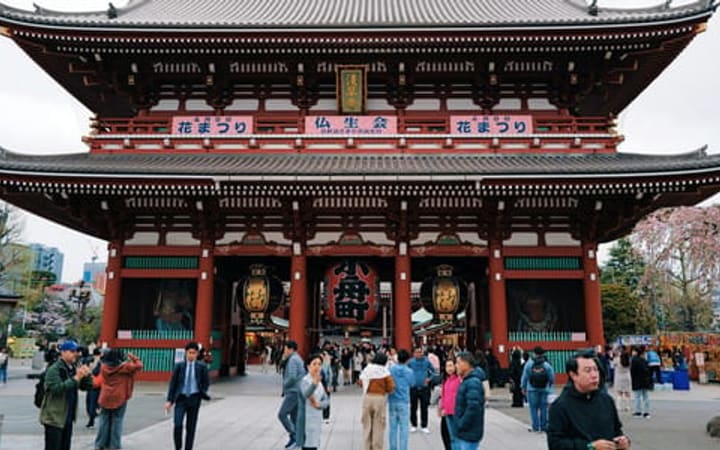
- Hozomon
- Senso-ji Main Hall
- Asakusa Shrine
- Kagetsudo melon pan
- Hoppy Street
- Denboin-dori
- Underground Street
- Kamiya Bar
- Azumabashi Bridge
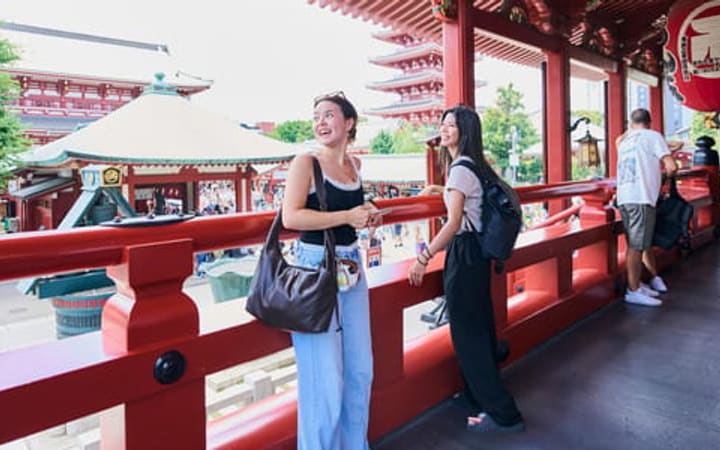
- Tourist Information Center. Start on the 8th-floor terrace for the overview, then pick up a map on the ground floor.
- Kaminarimon. The lantern is 3.9 m tall and weighs about 700 kg. Look underneath it for the carved dragon.
- Nakamise-dori. About 250 m and 87 shops, with the first stalls dating back to the late 17th or early 18th century. Please eat by the stall where you bought your food rather than while walking.
- Hozomon. The inner gate, whose upper floor stores sutras, including a Yuan-dynasty Buddhist canon.
- Senso-ji main hall. Look up at the dragon painted on the ceiling by Kawabata Ryushi. Don't photograph the altar inside.
- Asakusa Shrine. Unlike the concrete temple buildings, its hall is the original from 1649. It survived the fires and the war, and it is an Important Cultural Property.
- Kagetsudo. The jumbo melon pan (¥320) comes from the shop at the entrance to the Nishi-sando street, west of the main hall. They stop selling when it sells out.
- Hoppy Street. Around lunchtime the stew bars start filling their outdoor tables. Read our Hoppy Street guide before ordering.
- Denboin-dori. Asakusa Menchi's minced-pork cutlets to take away, and Daikokuya's dark, sweet-savory tempura bowls if you want to sit down.
- Asakusa Underground Street. Japan's oldest surviving underground shopping street, from 1955: a short, low-ceilinged row of noodle counters and barbers under the station.
- Kamiya Bar and Azuma Bridge. Finish on the corner at Kamiya Bar, which dates from 1880 (closed Tuesdays and two Mondays a month), then walk onto the bridge for the view of Skytree beside the Asahi golden flame.
When to go, and what to bring
Timing. Early morning is best for photos: the main hall opens at 06:00 (06:30 from October to March), long before the Nakamise shops. In the evening the painted shop shutters on Nakamise come out, and Senso-ji is lit from sunset until about 23:00, though the main hall closes at 17:00. See our Asakusa at night guide for an after-dark version of this walk.
Crowds. The 18th of every month is Kannon's fair day and the main hall is crowded. The Sanja Matsuri, held Friday to Sunday around the third Saturday of May, brings about 1.8 million people in three days. A walking tour that weekend is mostly spent standing still.
Weather. Check your paid tour's weather policy when you book; SGG tours may be cancelled in bad weather or extreme heat. In summer, book a 09:00 start and carry water. If the forecast is bad, swap the walk for a tea ceremony or craft workshop indoors.
Getting there. Most tours meet by Kaminarimon, a minute or two from Ginza Line Exit 1 and Toei Asakusa Line Exit A4. The Tsukuba Express station is a separate station about 600 m west; see getting to Asakusa.
Booking. The Localized walk on GetYourGuide offers free cancellation up to 24 hours ahead, so you can book it as a backup and still switch to the free tour if the day works out. Our GetYourGuide review has more on booking through the platform.
Book the two-hour Senso-ji walking tour from US$22.26 · GetYourGuide