
Very good. The most reliable free overview of Asakusa, written by a team in Japan. Check prices against official sources, and ignore the booking widget's promotions.
Good fortune
- Accurate Senso-ji hours, matching the temple's own
- Practical access directions
- Written and filmed by staff in Japan
- Three decades of track record
Tie it to the rack
- Hanayashiki admission price out of date
- Rickshaw guide price slightly off
- Booking widget shows an expired promotion
At Senso-ji you tie a bad fortune to the rack and leave it behind. We use the same scale for our verdicts.
japan-guide.com is where a lot of people first read about Asakusa, and it deserves that position. It has been around since 1996, it is written by staff who live in Japan, and on the things that matter most for a first visit — when the temple opens, how to get there, what is where — its Asakusa page is right. We checked it line by line against official sources. It is not perfect: some prices trail reality, and the booking widget on the page is less careful than the editorial text around it.
Who is behind it
The site was founded in July 1996 by Stefan Schauwecker, who grew up in Zurich and started it while studying in Vancouver. The operation moved to Japan in 2003 and is now a Japanese company, japan-guide.com Co., Ltd., with Schauwecker as editor-in-chief and president. Its staff page lists in-house writers, editors and videographers based in Japan.
That matters more than it sounds. japan-guide's pages read like somebody walked the route, and the directions show it.
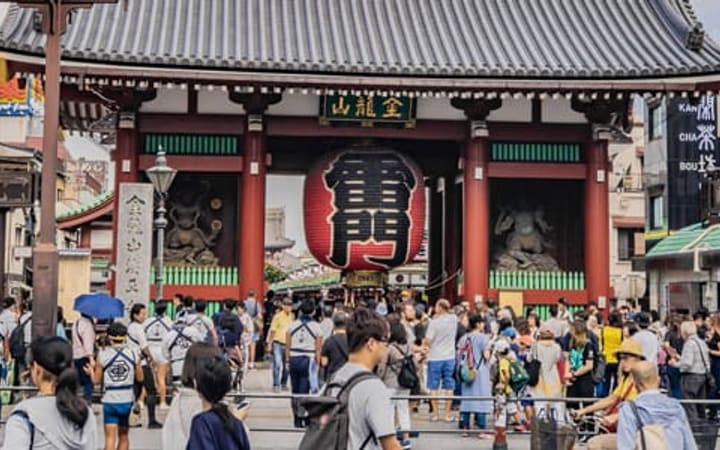
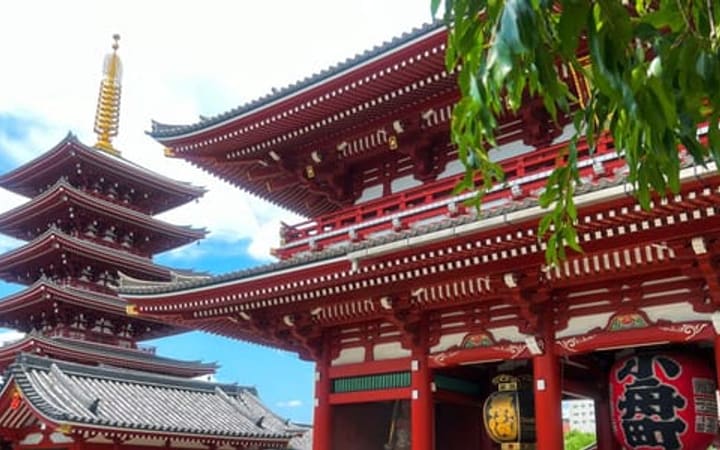
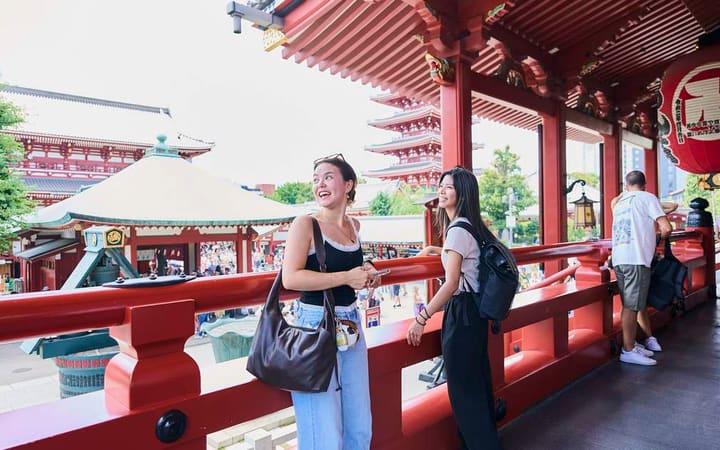
If japan-guide's page is where you start and you would like someone to walk you through the same sights, these walking tours cover Kaminarimon, Nakamise and Senso-ji in about two hours:
Prices are the lowest option the platform shows, in US dollars, and move with dates and exchange rates. The booking page is final. Prices checked: September 28, 2026.
What the Asakusa page gets right
The page covers Kaminarimon, Senso-ji, Dempoin, Nakamise, Kappabashi, the Asakusa Culture Tourist Information Center, Hanayashiki, food and access, in that practical order.
Senso-ji hours. It gives the main hall as open 6:00 to 17:00, and from 6:30 between October and March. That exactly matches the temple's own site, and it is more careful than many guides that simply say "the temple closes at 17:00". Those are main-hall hours only: the hall, pagoda and gates are lit up from sunset until about 23:00; our Senso-ji guide explains how to use the evening.
Nakamise. Its description of the shopping street as about 250 meters long with more than 50 shops is a good, usable picture. Our Senso-ji guide covers the street as part of the approach to the temple.
Dempoin. It notes that the Dempoin garden is generally closed to the public, with occasional special openings.
Access. The directions are clear and station-based, which is how you actually navigate Asakusa. Our getting there guide goes into exits and walking times.
What it gets wrong
Hanayashiki price. japan-guide still lists admission as ¥1,200 plus separate ride fees. The official adult admission is now ¥1,600, the unlimited-ride pass ¥3,000, and the online one-day pass (admission plus unlimited rides) ¥4,600. If you budget for a family day from japan-guide's number, you will be short. The full table is in our Hanayashiki guide.
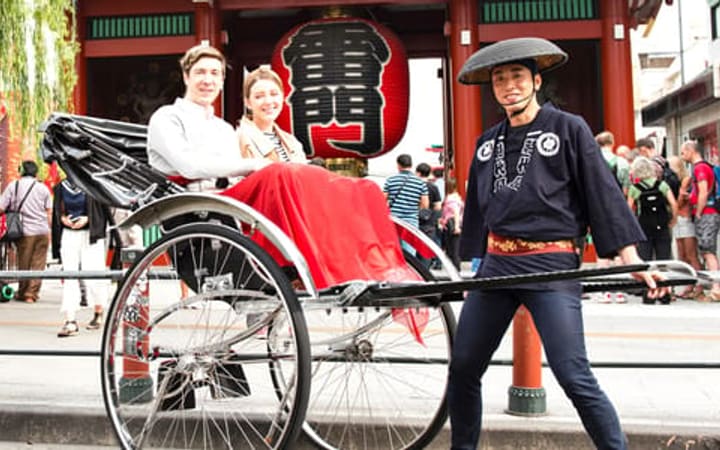
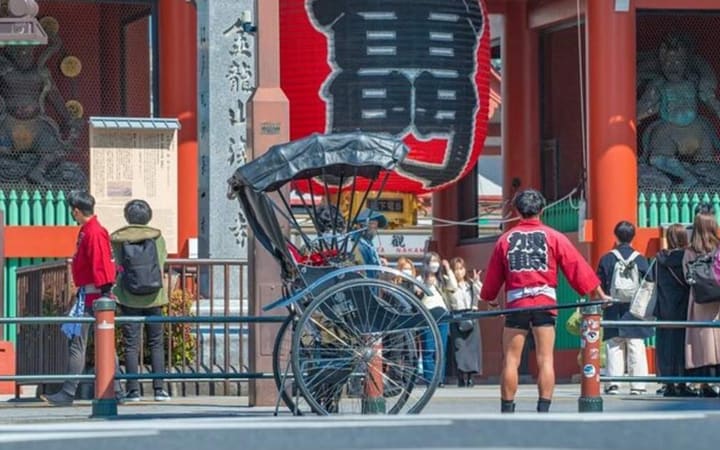
Rickshaw fares. The page suggests a 30-minute ride costs "around 9000 yen" for two. At the main operators, 30 minutes costs ¥9,000 for one passenger and ¥10,000 for two, because rickshaws are priced per vehicle rather than per person. The difference is small, but it is the kind of thing that causes an awkward moment at the end of a ride. Our rickshaw guide and Ebisuya review have the details. If you would rather book with free cancellation, these are well-reviewed options:

Prices are the lowest option the platform shows, in US dollars, and move with dates and exchange rates. The booking page is final. Prices checked: September 28, 2026.
How the page makes money
The editorial text is independent, but the page around it is commercial, and it is worth knowing what is what:
| Element | What it is |
|---|---|
| "Experiences around Tokyo" | A Klook-powered widget with a "View on Klook" button |
| Stays search | Hotel search across Booking.com, Airbnb, Rakuten Travel, trivago, JAPANiCAN and Hostelworld |
| Restaurant cards | Booking cards from restaurant reservation services |
The widget is the weak spot. When we checked, it showed a Kimono Miyabi listing with thousands of reviews, fine in itself, but its blurb still advertised a free-return promotion that had ended years earlier. That is an automated box nobody had looked at, not the editors' work. Treat anything inside the widget as an advert and check the live listing before you book.
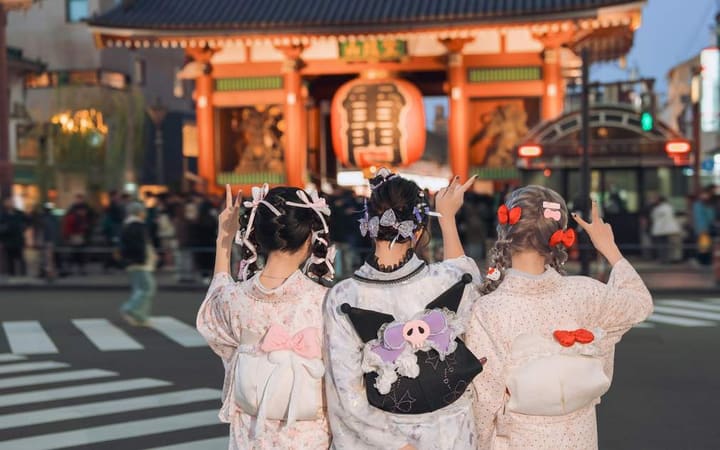
If kimono rental is on your list, our kimono rental guide compares the main shops, and this is the Miyabi listing as it stands today:

Prices are the lowest option the platform shows, in US dollars, and move with dates and exchange rates. The booking page is final. Prices checked: September 28, 2026.
Pair it with the official sites
japan-guide works best as a hub that sends you to the primary sources, and in Asakusa those are unusually good in English. Senso-ji's own site has English, Chinese and Korean versions covering its history, annual events and access. Hanayashiki's official site is available in English, Korean and Chinese, and its web store sells tickets at the gate price with free cancellation until 23:59 the day before. The Tourist Information Center opposite Kaminarimon answers questions in Japanese, English, Chinese and Korean until 20:00. Use japan-guide to decide what to see, then use those sites for anything that has to be exactly right on the day. Our Senso-ji official review and Tourist Information Center review cover both.
japan-guide vs the alternatives
Next to Plan My Japan, japan-guide is plainer, less personal and more exact. We would use Plan My Japan for ideas and photos, and japan-guide to confirm an opening time. Next to a single-neighborhood site like ours, japan-guide is broader but shallower: it tells you Senso-ji exists and when the hall opens, but not which gate to use to avoid the Nakamise crush or where to get a goshuin (Yogodo Hall, until 16:30).
It also has a useful news section. Its explanation of Japan's move from tax-free at the till to a refund when you leave the country is one of the clearer ones in English, and relevant if you plan a big Don Quijote run.
Verdict
japan-guide.com is the first page we would send a friend to for a free overview of Asakusa. Trust its hours and directions. Double-check its prices, especially for Hanayashiki, and ignore promotional text inside the booking widget. For anything you decide to book, GetYourGuide's Asakusa page has the widest choice: