
A world-class temple that costs nothing and asks little of you, with a clear official site. It loses a step only for its crowds and for leaving practical details, such as prices and the hours of minor halls, to guesswork.
Good fortune
- Free, open early, lit every evening until about 23:00
- Official site in English, Chinese and Korean
- Amulets shipped overseas from the temple's own shop
- Step-free help with an elevator by the main hall
Tie it to the rack
- Weekend and holiday crowds from late morning
- No official prices for omikuji or goshuin
- Hours published only for the main hall
At Senso-ji you tie a bad fortune to the rack and leave it behind. We use the same scale for our verdicts.
This review looks at Senso-ji in two ways: as a place to visit, and as an "operator" with its own official channel, senso-ji.jp. For the practical walk from Kaminarimon to the main hall, the Nakamise snacks and the difference between the temple and Asakusa Shrine, read our Senso-ji and Nakamise guide. Here we cover what the temple itself tells you, what it leaves out, and how to handle the goshuin, the fortunes and the crowds.
What the official site gives you
senso-ji.jp is published in Japanese, English, simplified and traditional Chinese, and Korean. It is a temple's website, not a tourism portal, so it answers the questions a temple cares about. Useful sections:
- History and the principal image. The founding story of 628, when two fishermen netted a Kannon statue in the Sumida River, and why that statue has been a hidden image that is never shown.
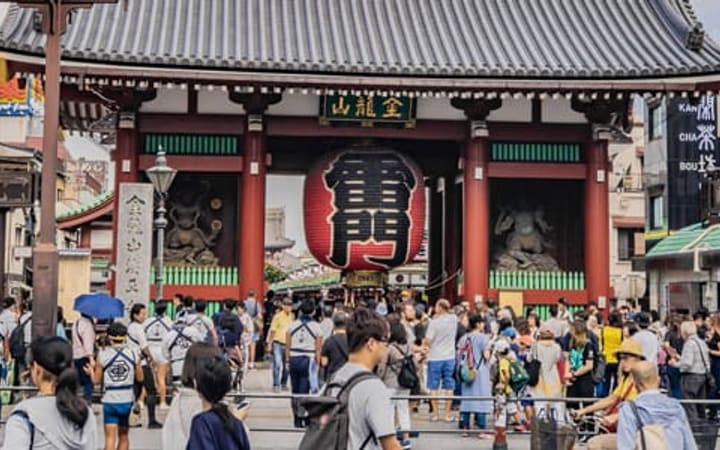
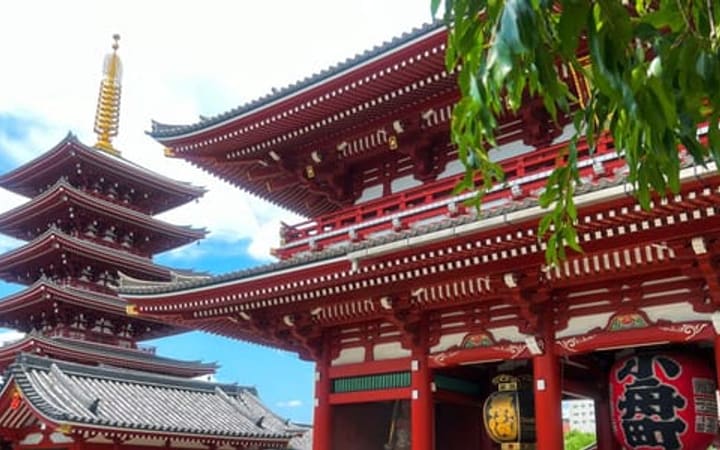
- Precinct guide. Pages for Kaminarimon, Nakamise, Hozomon, the main hall, the five-storey pagoda and the Yogodo hall, with building dates and dimensions. This is where you learn that the Kaminarimon lantern weighs about 700 kg, not the 400 kg you will read on many blogs.
- Annual events. Dates for the Hozuki-ichi market (9–10 July), the Hagoita-ichi market (17–19 December), the dragon dances and New Year rites.
- Amulets and prayers. Descriptions of the charms and how to apply for a formal prayer (gokito).
- Access and FAQ. The FAQ is the most useful page on the site, and most visitors never find it.
What it does not do is sell anything for entry. There is no ticket, no timed slot and no booking. Any listing that sells "Senso-ji admission" is selling a guided walk; the temple itself is free.
Prices are the lowest option the platform shows, in US dollars, and move with dates and exchange rates. The booking page is final. Prices checked: September 28, 2026.
If you do want a guide, these are the best-reviewed walking tours that include the temple. Most last about two hours and meet near Kaminarimon. For free volunteer tours, see our walking tours guide.
Hours: read them carefully
The only hours the temple publishes are for the main hall: 06:00–17:00, with a 06:30 opening from October to March. For other halls, the temple says to ask. That leads to a common misunderstanding: Senso-ji does not "close at 17:00". The open-air grounds stay accessible, and from sunset until about 23:00 the main hall, the pagoda, Hozomon and Kaminarimon are lit every night.
Phone enquiries go to 03-3842-0181, answered 09:00–16:30 but not on Sundays or holidays. Realistically, the FAQ page answers most questions faster.
Rules and etiquette the temple asks for
Senso-ji is a working temple, and the rules are light:
- Purify first. At the water spout, rinse the left hand, then the right, then your mouth from your cupped palm. Lips never touch the ladle.
- Photos outside, not at the altar. Photography is fine in the grounds. Inside the main hall there are no-photo signs around the inner sanctuary.
- Eat by the stall on Nakamise. The shopping street asks visitors not to eat while walking. This is a request enforced by signs and shopkeepers, not a law, but please follow it.
- Tie bad fortunes where the temple asks. Not on trees or random railings, but on the designated racks.
- No doll memorials. Unlike some temples, Senso-ji does not accept dolls for memorial services.
For accessibility, there is an elevator on the left (west) side of the main hall, and multi-purpose toilets to the right of Hozomon and behind the main hall. The temple has no car park.
Goshuin: the temple seal
The goshuin, a red seal with brushed calligraphy, is written at the Yogodo hall on the west side of the grounds, not at the main hall. Hours are 08:00–16:30, with special hours at New Year and on 9–10 July. Two seals are offered: one for the principal Kannon and one for Daikokuten, one of the Asakusa Seven Lucky Gods. Stamp books are sold at the same desk.
The official page does not state the fee. Visitors usually report ¥500, so carry coins and check the sign at the desk. An easy mistake is arriving at 16:45 after a long lunch; the main hall is still open, but the goshuin desk is not.
Senso-ji is also No. 13 on the Bando 33 Kannon pilgrimage and No. 1 on the Edo 33 Kannon route, so you will sometimes see pilgrims with books full of seals from other temples.

Omikuji: why Senso-ji is famous for bad luck
The fortunes at Senso-ji come from the Kannon hyakusen, a set of 100 lots traced back to the monk Ryogen. The temple itself notes that its slips are known for a high share of kyo, bad luck, and that it keeps the traditional ratio rather than softening it for visitors. We like that honesty; it is why our reviews use the same fortune scale.
How it works: drop a coin in the box (usually ¥100 a draw, though the temple does not publish the price, so go by the sign), shake the metal canister until a numbered stick comes out, and open the drawer with that number. Slips have English. Return the stick. If the news is bad, fold the slip and tie it to the rack, and the bad luck stays at the temple. If it is good, keep it.
Crowds: when Senso-ji is at its best and worst
The temple counts about 30 million visits a year. That is a cumulative number, not individual visitors, but on a weekend afternoon you will believe it. Roughly:
- Best: weekdays before 09:00, before the Nakamise shutters open; and evenings after 17:00, when the hall is closed but the buildings are lit.
- Busy: weekends and holidays from late morning to mid-afternoon, and the 18th of every month, Kannon's fair day.
- Very busy: the first three days of the New Year, when the temple has run a one-way route with entry restrictions and streamed live crowd cameras; the Sanja Matsuri weekend in May, run by the neighboring Asakusa Shrine; and the July and December markets.
If you want the view without the crush, the free 8F terrace of the Asakusa Culture Tourist Information Center looks straight down Nakamise to the temple, and it is open until 22:00.
Buying charms from home
The temple runs an online shop, senso-ji.online, and the English site says plainly that it will ship amulets overseas. Shipping fees have been revised before, so check the total at checkout. For a temple of this size that is a genuinely useful service: you do not have to buy on the spot in a crowd.
Verdict
As a place, Senso-ji is as good as free sightseeing gets in Tokyo: an almost 1,400-year-old story, rebuilt with care after 1945, open from early morning and lit late into the night. As an official channel, senso-ji.jp is accurate and multilingual, and its FAQ answers the questions that matter. It stops short of daikichi only because the practical details visitors want most — prices of fortunes and seals, hours of the smaller halls, crowd levels — are left for you to discover on the day.
Pair the temple with a meal from our Asakusa food guide, a cheap bowl of soba in the Underground Street, or an evening from our Asakusa at night guide.
See the Senso-ji walking tour from US$22.26 · GetYourGuide